
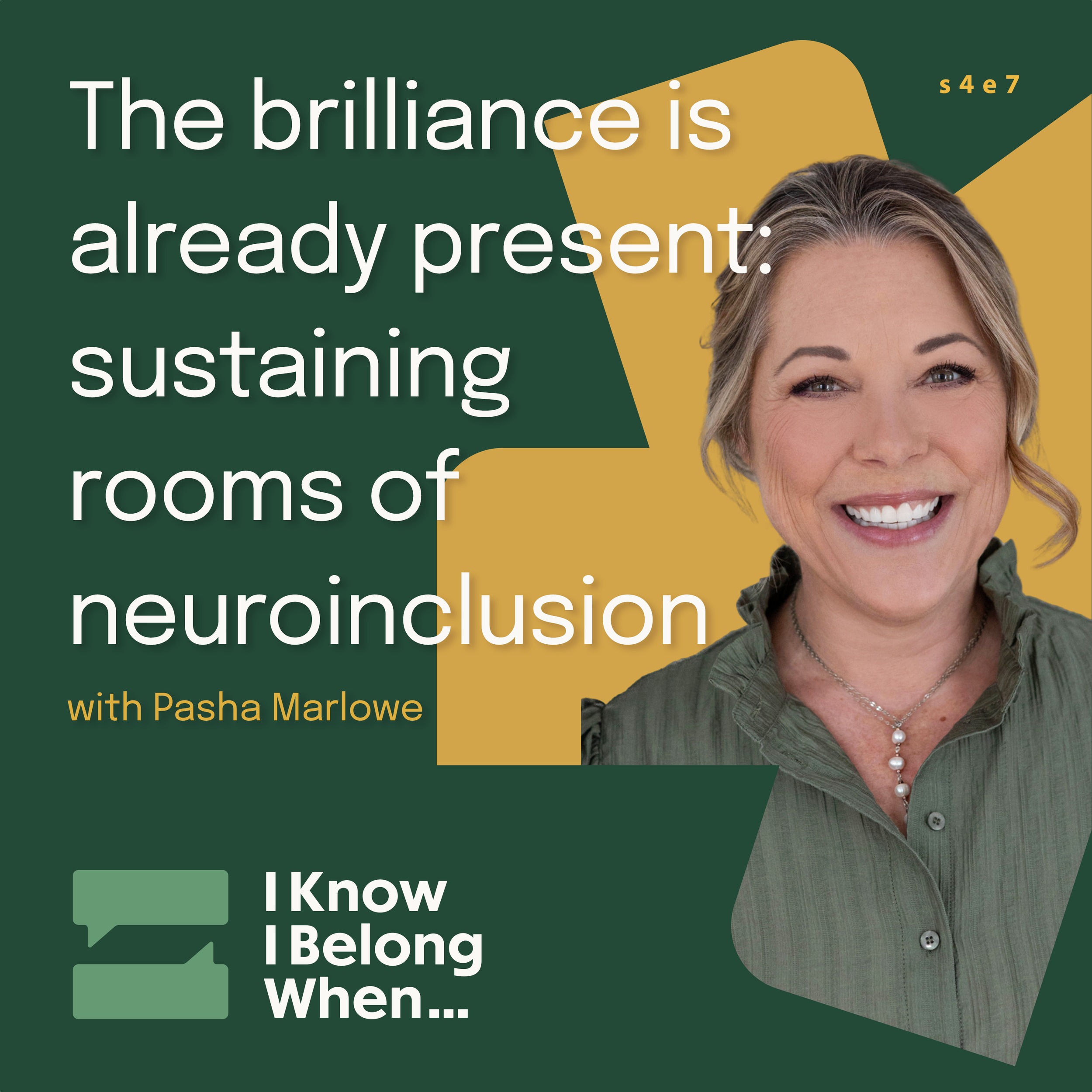
The brilliance is already present: sustaining rooms of neuroinclusion with Pasha Marlowe
Engage through your podcast player of choice!
The most brilliant person in any room may be the one no one thought to hear. Pasha Marlowe has spent more than thirty years changing that. In this episode of I Know I Belong When…, Pasha joins host, Christopher Bylone, Principal Strategist, for a conversation about worth, design, and the quiet decision to know you belong to yourself before you ask anyone else to make room for you.
Pasha is a global speaker on neuroinclusion and relational intelligence, a mental health professional, and the author of Creating Cultures of Neuroinclusion. Her work has reached teams at Microsoft, IBM, SHRM, T-Mobile, and Hasbro, and it carries a single stubborn idea: you do not unlock creative capacity by collecting creative people. You unlock it by building a place where every mind can offer its own kind of genius.
This is a story that lives in more than one arena. It begins inside a person, in the moment Pasha decided her own worth was not up for a vote. It moves into workplaces and conferences, where a seating chart can quietly tell someone they matter less. It reaches into home, community, and society, where the same design choices decide who is heard. Belonging in the workplace is part of it and never the whole of it.
Watch the full episode :
Must-hear insights & key moments
Why belonging is something a person knows, not something an organization hands out, and what shifts when leaders accept that.
The two-day story of a speaker event in Detroit, and the decision that turned worthlessness into knowing she belongs to herself.
How a room gets designed to hear every mind, from seating and sound to sensory needs, and why conferences model the habits offices copy.
The reason psychological safety is not real until the least safe person is safe, a test most inclusive culture efforts skip.
What ageism and post-menopausal invisibility taught Pasha about choosing to be more visible, not less.
Pasha’s standout quotes:
“There's multiple ways to be brilliant and multiple ways to be a genius. There's not one typical way or one, quote-unquote, ‘normal way.’”
“if I belong to myself and not to them and not try to gain their belonging, then, then I could actually relax and just be comfortable.”
“I don't feel like we create belonging. I don't feel like an organization or a space creates belonging. I think it's the people who feel like they belong.”
“you can't have psychological safety until the least safe person feels safe.”
“everybody has access needs, supporting sensory needs. Leaders have needs, too.”
“if I share something, then all of a sudden that creates more chance of psychological safety for you to then share something that you need.”
“I know I belong when I remember that I have always belonged because I am.”
Why this episode matters
Belonging is often treated as one more pillar to stack beside inclusion, diversity, equity, and accessibility. Pasha reframes it as the outcome of that work, the thing people arrive at when the room is built well. Her language gives listeners something to use: a way to name their own worth, a test for whether a space is truly safe, and a simple first move, sharing a need, that any person can make this week. This is human-centered innovation applied to the most human question there is, whether a person knows they belong.
Who should listen
This conversation is for anyone building a place where people can thrive. It is for a person working out their own worth and learning to know they belong to themselves first. It is for parents making a home or chosen family, and for organizers and neighbors widening the circle. It is for people managers, human resources leaders, and inclusion practitioners shaping people experience and strategic inclusion across remote and hybrid teams. Anyone searching for language for belonging in everyday life has a reason to listen.