
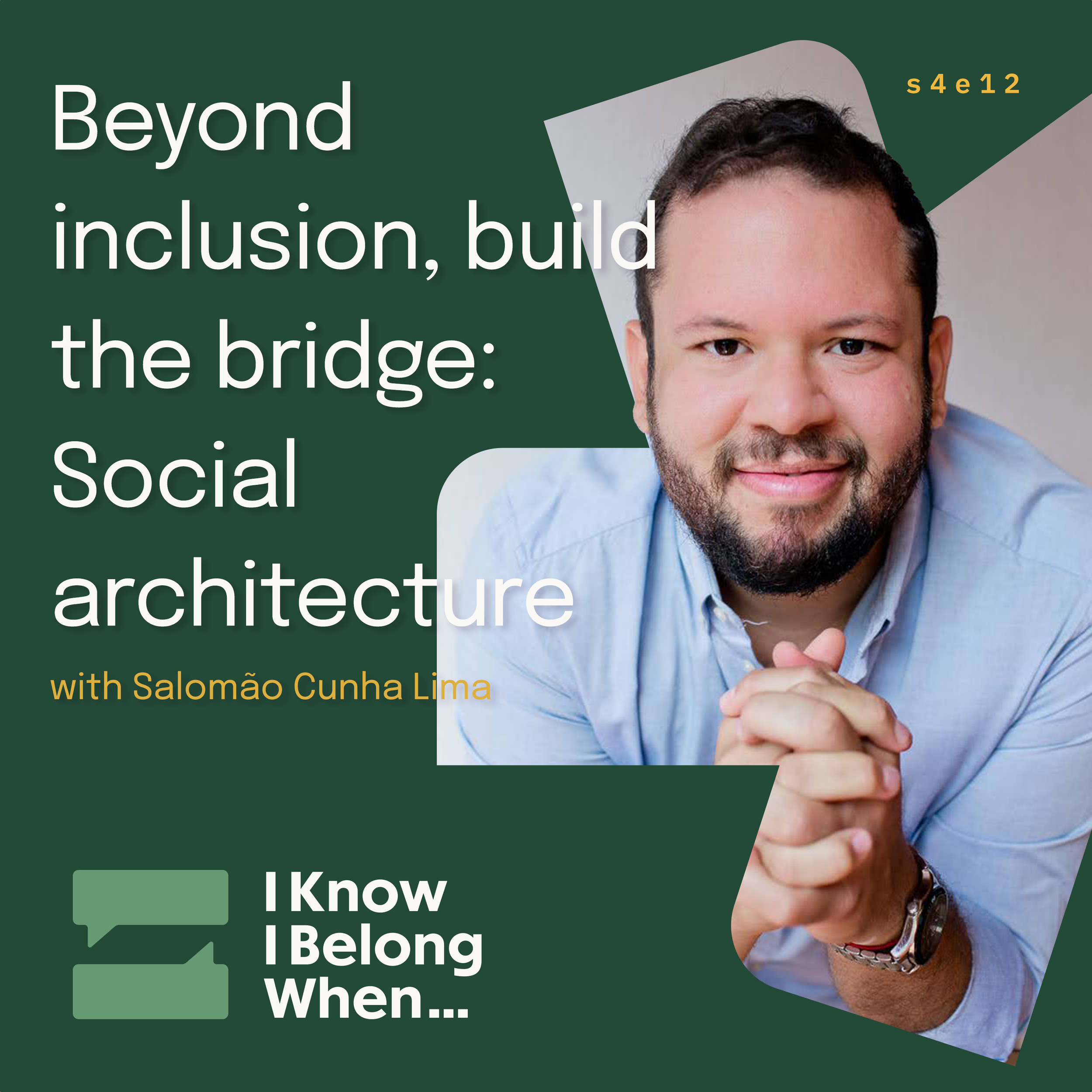
Beyond inclusion, build the bridge: Social architecture with Salomão Cunha Lima
Some people wait for a door to open. Salomão Cunha Lima decided the room needed to be built.
In this episode of I Know I Belong When…, host, Christopher Bylone, is joined by Salomão Cunha Lima, founder and CEO of Sal&Co, a Social Architecture Lab in São Paulo, Brazil. The conversation moves through every arena of a life: self, home, community, work, and society.
Salomão calls his work social architecture rather than social impact, and the difference is structural. On one side is a company. On the other is a community. Neither side changes shape. The work is designing something strong enough for both to cross and durable enough to outlast the announcement. Across eighteen years in Latin America he has mobilized more than two million dollars in corporate partnerships for clients including BMW, Disney, and Deloitte.
He also makes an argument here that reorders two words people often treat as interchangeable. Inclusion, he says, carries a hierarchy inside it. Someone grants, and someone receives. A sense of belonging works differently, and it begins with permission a person gives to themselves.
This is a conversation about inclusive culture, authentic leadership, and human-centered innovation. It is equally about faith, a name he almost surrendered for the convenience of strangers, and what a person does when no existing room will hold them.
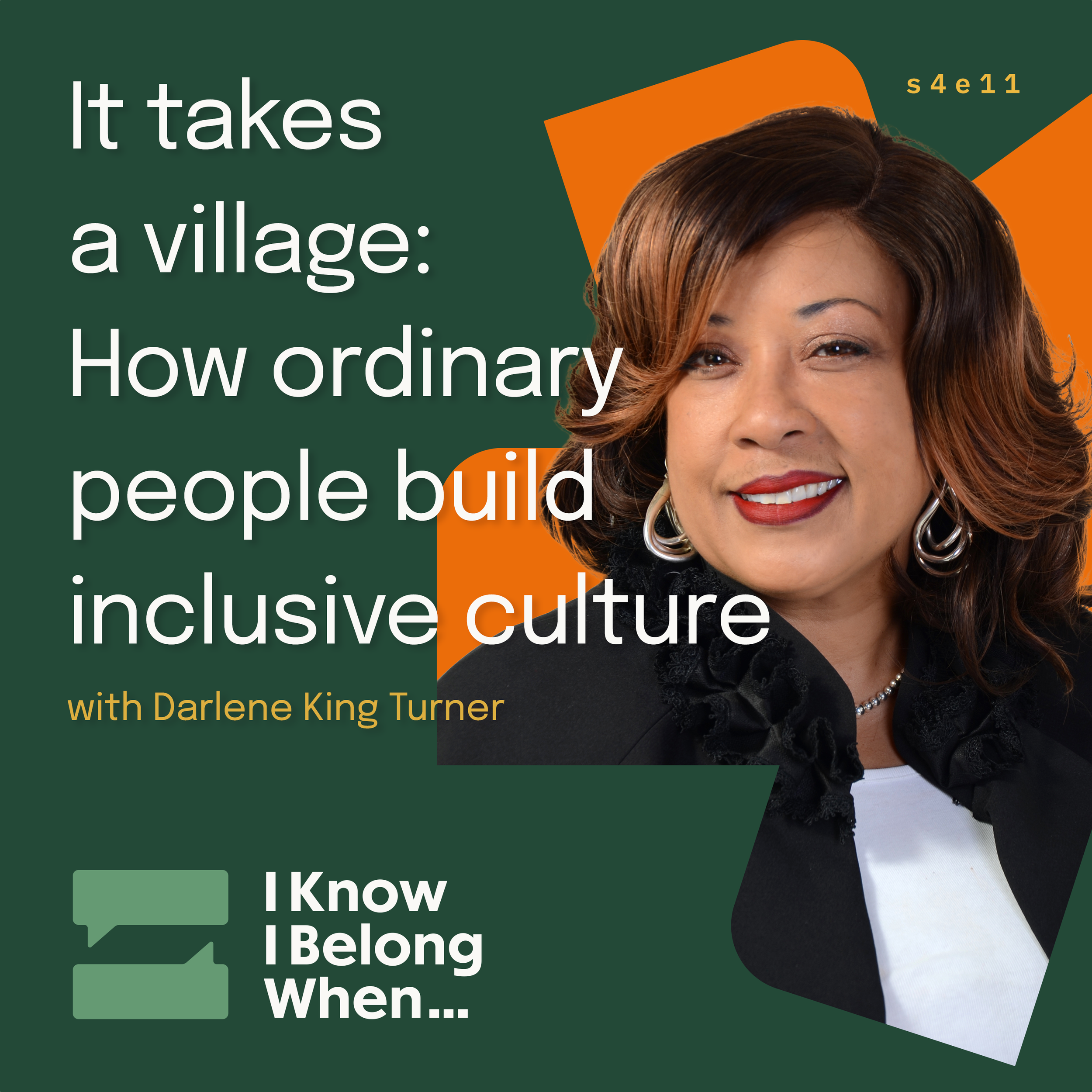
It takes a village: how ordinary people build inclusive culture with Darlene King Turner
Belonging is not a program that gets rolled out at work. It is the durable knowledge that who you are is enough, and it has to hold at home, in your community, and in the wider society, not only in a conference room.
In this episode of I Know I Belong When…, Darlene King Turner joins host, Christopher Bylone, for a conversation that refuses to keep belonging inside the workplace. Darlene is CEO and president of the Unity Collaborative, where she designs strategic initiatives that dismantle systemic barriers for businesses, youth, families, and whole communities at once. She led the Michigan Diversity Council for ten years, and before that she directed training and development for all thirty-four school districts in Wayne County. Before any of that, she spent six years as a national concert promoter, touring the world and producing shows across Detroit. She learned to fill a room long before she learned to change one.
Her central claim arrives early, and it reframes everything after it. Belonging does not belong to an institution or an entity. It belongs to every living, breathing person. No degree and no title is required to create a space where another person knows they belong. That is true for a chief executive, and it is just as true for a student, a neighbor, and a store clerk.
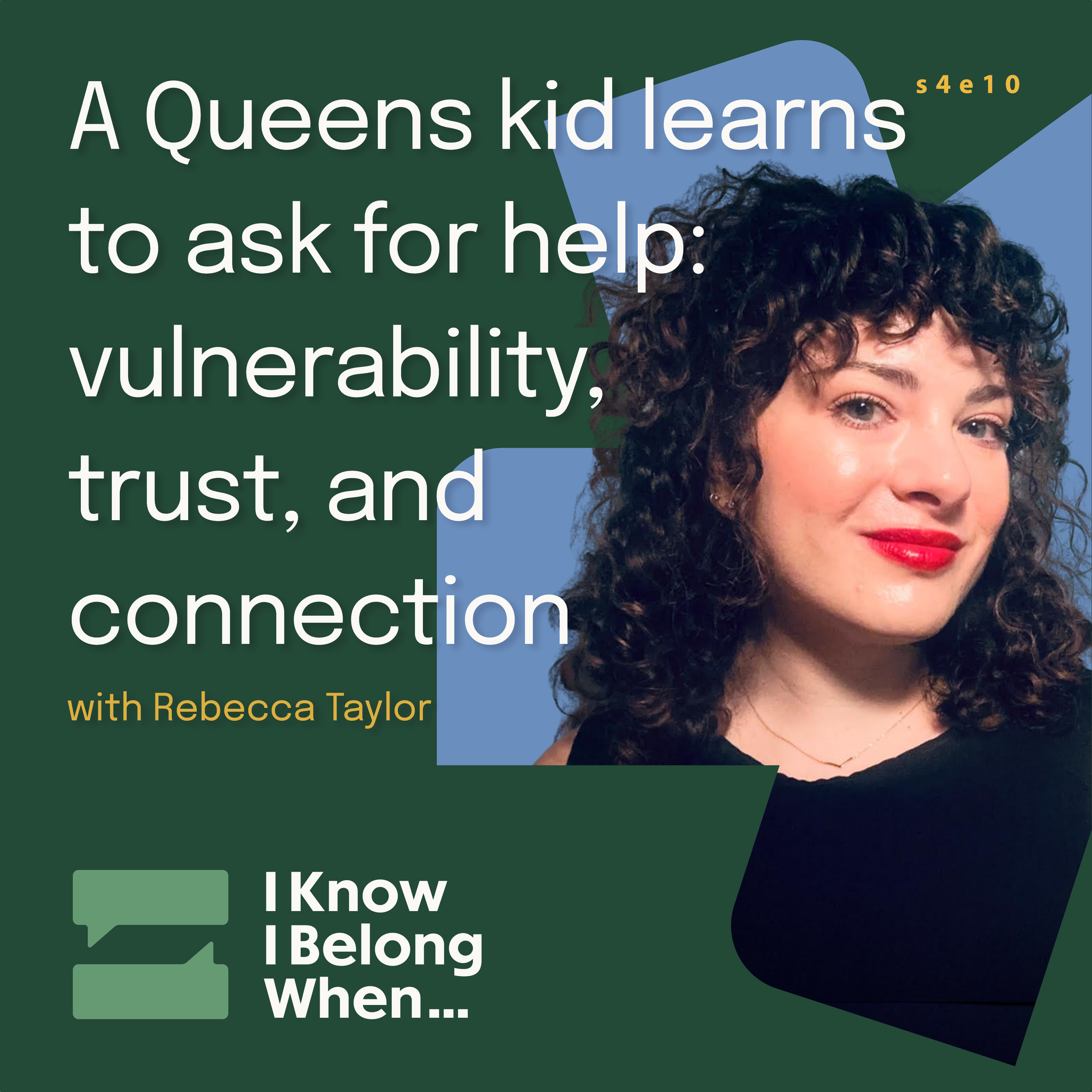
A Queens kid learns to ask for help: vulnerability, trust, and connection with Rebecca Taylor
Belonging does not begin at work. It begins in the people who hand you a baby at a family picnic and never think twice, in the neighbors who show up when the holidays fall apart, and in the quiet moment you finally let yourself ask for help.
On this episode of I Know I Belong When…, host Christopher Bylone welcomes Rebecca Taylor, a people strategy leader who has spent more than a decade in HR saying the quiet part out loud. Rebecca co-founded SkillCycle and helped scale it onto Inc's fastest growing companies list three years running, and she now leads community and content at All Voices, where she hosts HR Voices. She is also a Queens kid who will not go 10 minutes without telling you so.
This is a conversation about building belonging across every arena of a life. Rebecca traces the four-generation friend family that raised her, the moment at work when she knew she did not belong, and the leader she chose to become because of it. Belonging, here, is not one more pillar of inclusion work. It is the outcome of inclusion, diversity, equity, and accessibility done well, and it gives listeners language to name a sense of belonging in their own lives.
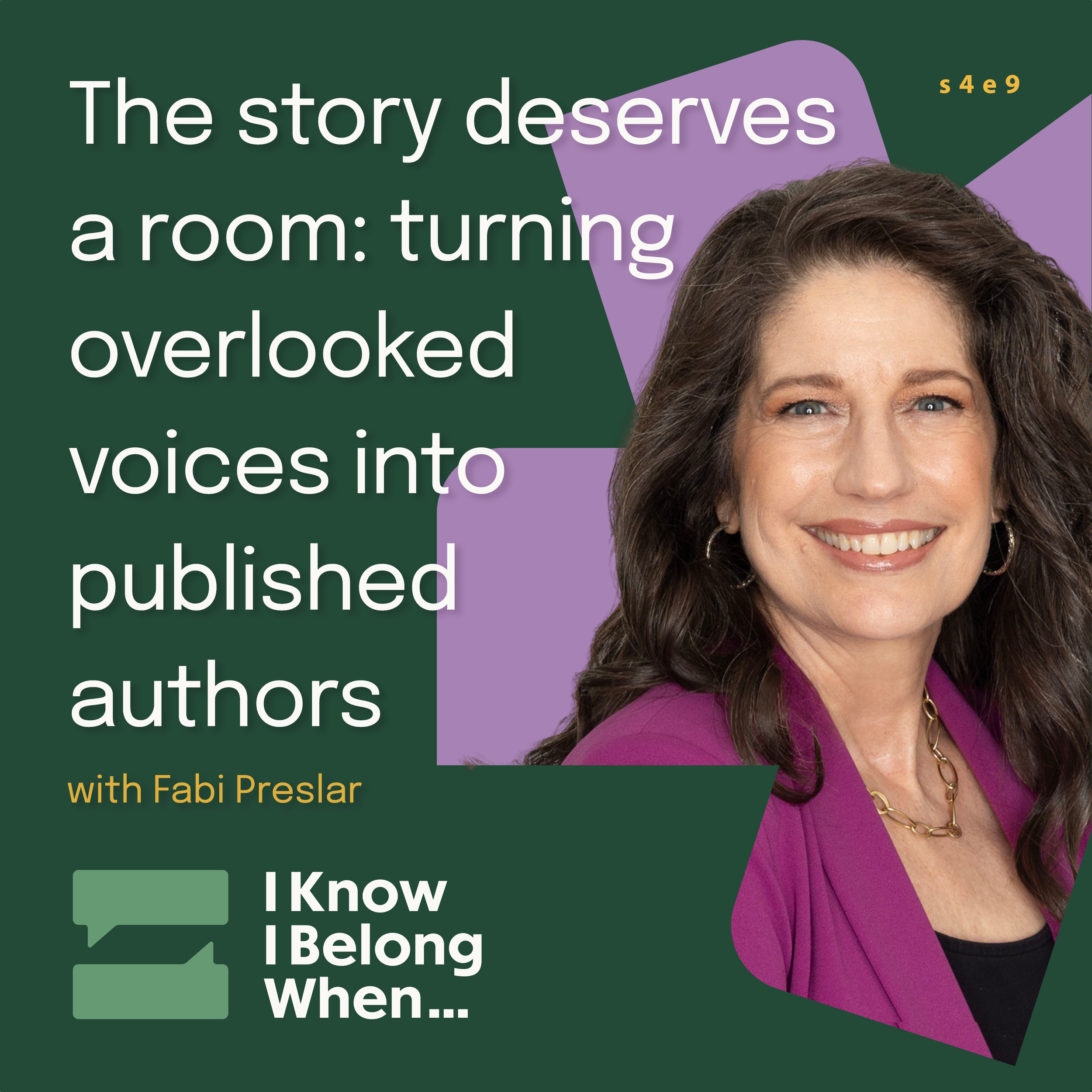
The story deserves a room: turning overlooked voices into published authors with Fabi Preslar
Most people treat a book as a finish line. You write it, you print it, you set it on a shelf, and the work is done. Fabi Preslar spent close to three decades proving that idea backward. In her hands, a book is not where a story ends. It is where a person finally gets seen.
In this episode of I Know I Belong When…, host Christopher Bylone welcomes Fabi Preslar, founder of SPARK Publications and the nonprofit Radiant Chapters Collective, for a conversation that reaches past the workplace. Fabi came up through a high school trade school and a community college design program, then built a nationally recognized publishing firm with over 350 industry awards. Along the way she learned something this show returns to again and again: belonging is not one more pillar of inclusion work. It is the outcome of inclusion, diversity, equity, and accessibility done well, and it shows up across every arena of a life, from self and home to community, work, and society.
This is a story about knowing you belong to yourself first, then finding the rooms, tables, and people where that knowledge holds. It offers language for belonging in everyday life, not only at work, and models the authentic leadership and inclusive culture this show champions.
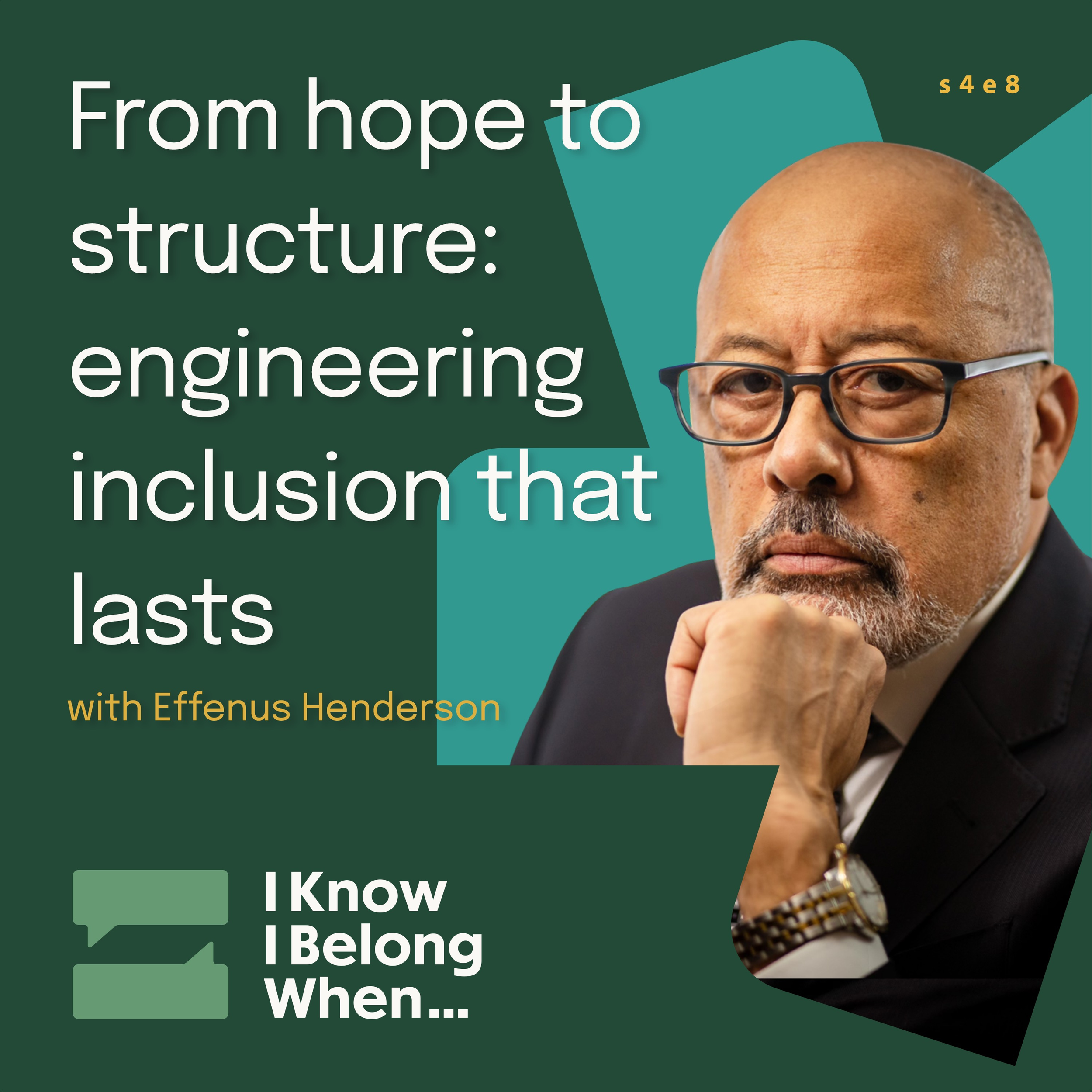
From hope to structure: engineering inclusion that lasts with Effenus Henderson
Most people treat inclusion like a feeling, something you hope for and revisit once a year. Effenus Henderson spent more than forty years proving it can be something you design. In this episode of I Know I Belong When…, host Christopher Bylone welcomes the president and CEO of HenderWorks, the strategist who convened the international working group behind ISO 30415, the first global standard for diversity and inclusion.
This is a conversation about belonging as a whole-life reality, not a workplace perk. Effenus traces his path from a small farm in eastern North Carolina to the General Assembly of the United Nations, where he spoke on intercultural diversity. He shows how a sense of belonging is something a person knows, not something they wait to feel, and how it grows across every arena: in who we are, in the rooms where we work, and in the wider society we all help shape.
Effenus wrote three books, including The Architecture of Inclusion, and co-founded the Institute for Sustainable Diversity and Inclusion. He has also written more than sixty original songs, because he believes equity work without a soul does not last. What emerges is authentic leadership grounded in structure and heart at once, and a language for building belonging that any listener can carry into everyday life.
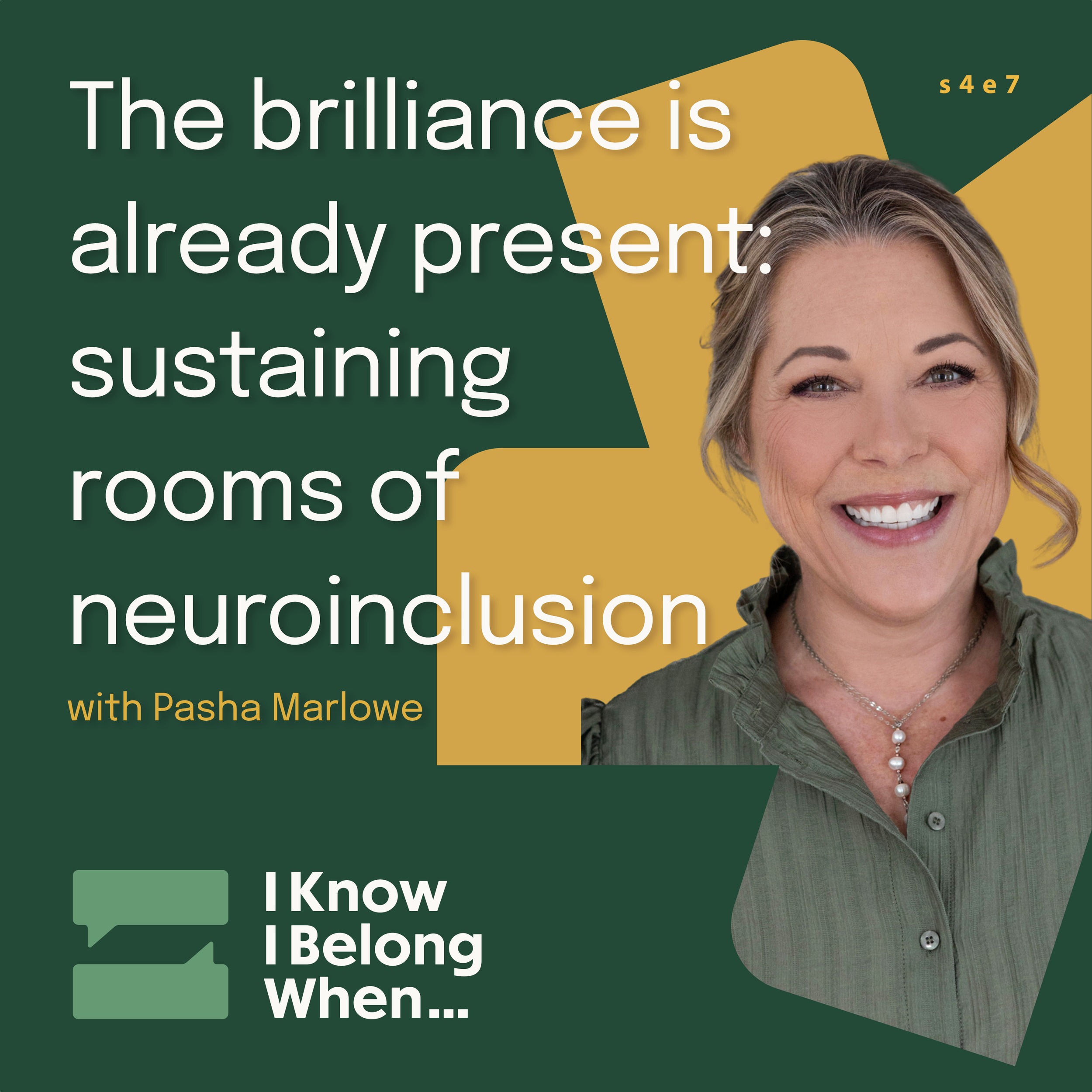
The brilliance is already present: sustaining rooms of neuroinclusion with Pasha Marlowe
The most brilliant person in any room may be the one no one thought to hear. Pasha Marlowe has spent more than thirty years changing that. In this episode of I Know I Belong When…, Pasha joins host, Christopher Bylone, Principal Strategist, for a conversation about worth, design, and the quiet decision to know you belong to yourself before you ask anyone else to make room for you.
Pasha is a global speaker on neuroinclusion and relational intelligence, a mental health professional, and the author of Creating Cultures of Neuroinclusion. Her work has reached teams at Microsoft, IBM, SHRM, T-Mobile, and Hasbro, and it carries a single stubborn idea: you do not unlock creative capacity by collecting creative people. You unlock it by building a place where every mind can offer its own kind of genius.
This is a story that lives in more than one arena. It begins inside a person, in the moment Pasha decided her own worth was not up for a vote. It moves into workplaces and conferences, where a seating chart can quietly tell someone they matter less. It reaches into home, community, and society, where the same design choices decide who is heard. Belonging in the workplace is part of it and never the whole of it.
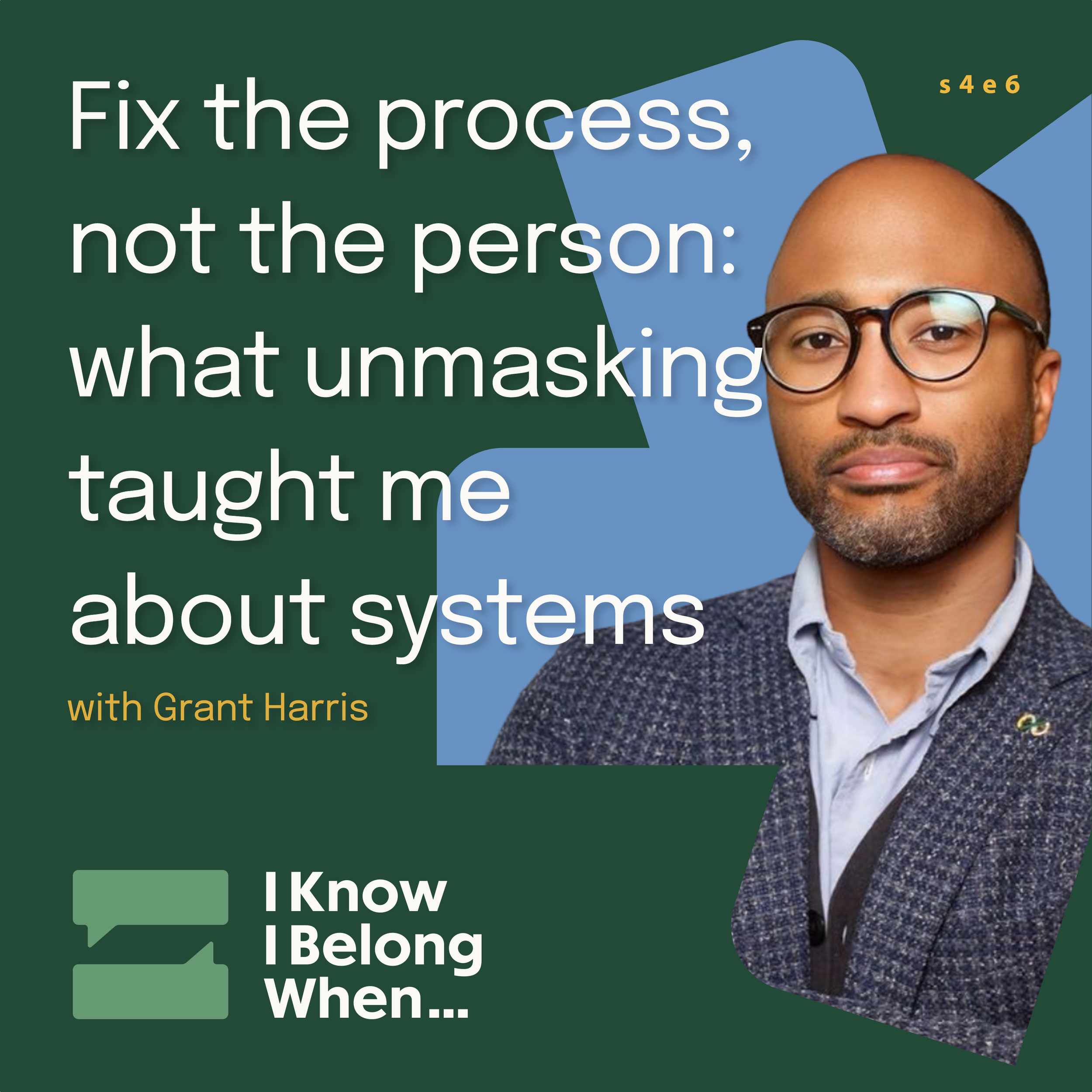
Fix the process, not the person: what unmasking taught me about systems with Grant Harris
What happens when a capable person stops asking what is wrong with them and starts asking what is wrong with the room around them? That question anchors this conversation, and it reaches far past any office.
In this episode of I Know I Belong When…, host Christopher Bylone welcomes Grant Harris, MBA, Certified Diversity Executive, neuro-inclusive speaker, human-centered performance strategist, and founder of GTH Consulting. Grant is known for one deceptively simple charge to leaders: fix your process, not your people. He is also a late-diagnosed autistic leader, a three-time author, a Hall of Fame athlete, and a man who has memorized every country's flag.
Grant joins Christopher to trace his own before and after, the years he spent believing he was the problem, and the moment he knew he belonged in a room full of his people. His story moves across a whole life. It lives in the self, in the quiet work of knowing who you are is enough. It lives at home and in chosen family, where the people closest to him learned how his brain actually works. It lives in community, where he found others who show up differently and know they belong anyway. And it lives at work, where he helps organizations build belonging in the workplace by redesigning the systems around people instead of labeling the people. This is a conversation about human-centered innovation, strategic inclusion, and the language for belonging that one honest story can offer.
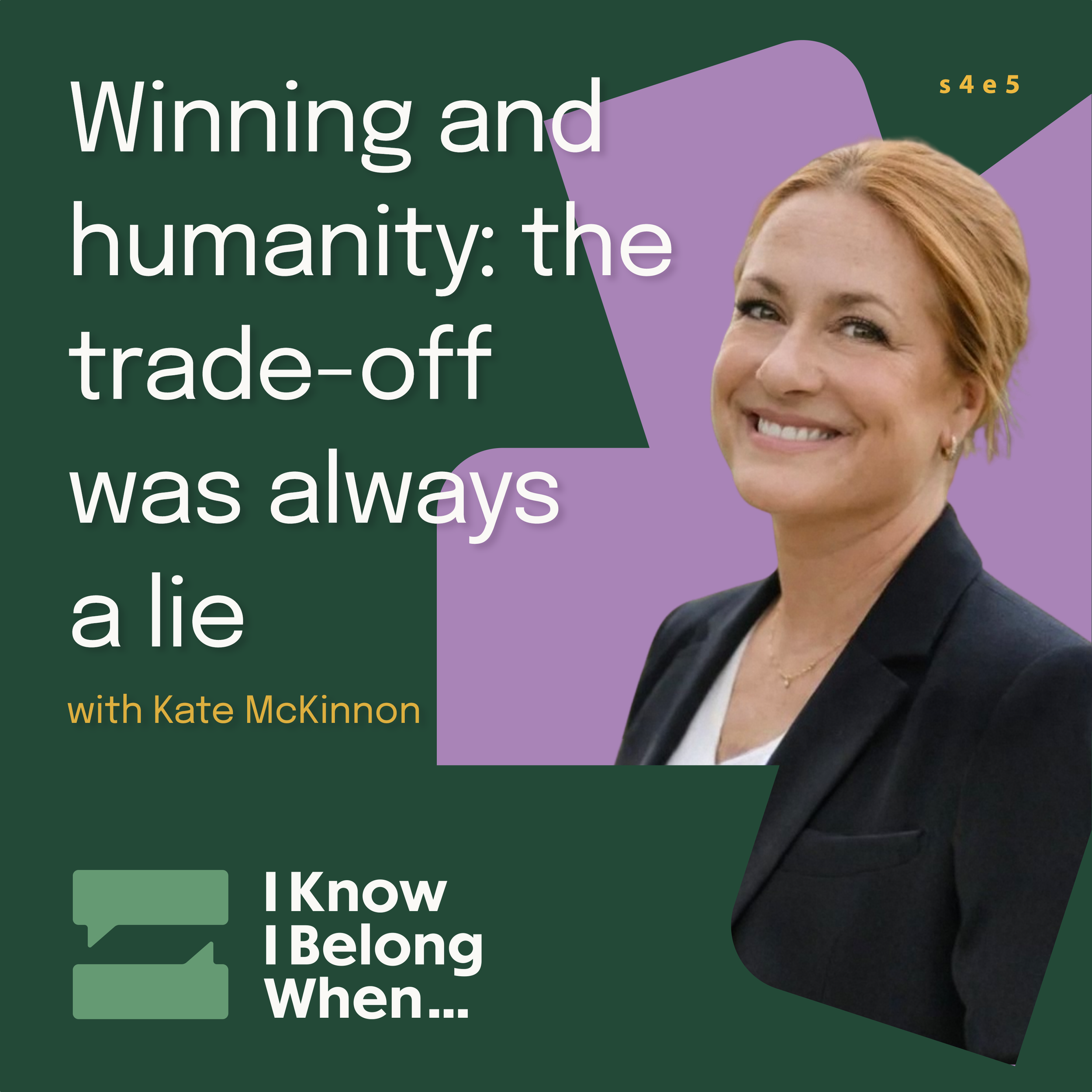
Winning and humanity: the trade-off was always a lie with Kate McKinnon
There is a story we tell ourselves about high-performance work: that winning costs you the people, that greatness and humanity cannot share the same room. In this episode of I Know I Belong When…, HR executive, coach, and founder Kate McKinnon shows that the choice itself was never real. Across more than 15 years in human resources, most recently as head of people inside the pressure-cooked world of sports, Kate built cultures people refused to leave, earning recognition as both a Most Loved Workplace and one of the Best Employers in Sports. Host, Christopher Bylone, joins her to trace how belonging in the workplace grows from something quieter and more personal: the moment a person knows they can bring their whole self to the room.
This is not a conversation about choosing humanity over results. It is about how the two rise together. Kate names the false trade-off many leaders still believe, then offers a human-centered way through it, one rooted in authentic leadership, strategic inclusion, and the daily practice of building belonging. She traces her own moment of knowing she belonged, the day vulnerability stopped reading as weakness. She also names a moment she knew she did not, and the lesson it taught her about who culture chooses to include. Whether you lead a team, guide a family, or are still working out where you add value, this story gives you language for belonging you can carry into every part of your life.
Joy is the fuel, not the reward: rethinking leadership, home, and self with Greg De Koker
Most of us were taught to earn joy. Land the results, hit the numbers, and then maybe you get to feel good. Greg De Koker spent a career proving that this order is backward, and that the truth reaches into every part of a life, not only the office. On this episode of I Know I Belong When…, Greg joins host Christopher Bylone. He is a brand and culture transformation expert, a bestselling co-author, and the mind behind the forthcoming book Joy Squared: The Hidden Power of Joy in Leadership.
Greg carries a mission with a number attached to it: forty-four million people living, working, and leading with more joy, on purpose. That mission grew from a pattern he could not ignore across hundreds of stakeholder interviews. There was too much suffering at work, and it did not stop at the office door. He named it the global joy deficit, and then he built an ecosystem to help close it.
This conversation moves from the boardroom to the family cottage and back again. Greg reframes joy as rigorous strategy rather than a soft perk, and he shows how a single childhood moment reshaped what home means to him. This is a story about building belonging and creating belonging in everyday life, across self, home, community, and work.

The cost of staying: Knowing your worth in every room with Öykü Api
Belonging is bigger than any office. It begins in the quiet knowledge that who you are is already enough, and it follows you into every room you walk into for the rest of your life. In this episode of I Know I Belong When, host Christopher Bylone sits down with Öykü Api, a thought leader in inclusion, change, and leadership whose story stretches across self, home, community, and work.
Öykü spent twenty years inside corporate finance and walked out with three published books, a Cornell credential in women’s leadership and diversity, a law degree, and a passport stamped on all seven continents, Antarctica included. Underneath the resume sits one clarifying thesis: when a career, a relationship, or a place stops serving your growth, the cost of staying becomes higher than the cost of leaving.
This is a conversation about knowing your worth in every room. Öykü reframes a sense of belonging as something a person carries inward first, not something a title, a team, or another person’s validation hands over. She gives listeners language for belonging that reaches from the self outward, into chosen family, into community, and into the daily work of building inclusive culture. Through her first-person story you will find new words for authentic leadership, strategic inclusion, and the quiet courage it takes to leave a room that no longer fits. This is storytelling as strategy, and proof that creating belonging in everyday life begins with you.
When everyone in the room is seen: human-first leadership with Dean Carter
What does it mean to lead so that everyone in the room knows they belong? Our guest has spent more than 25 years answering that question, and his answer reshapes how we think about people, work, and life.
Meet Dean Carter. He has served as chief human resources officer four separate times, at Fossil, Patagonia, Sears and Kmart, and Guild, earning national recognition for reinventing the future of work. His book, Employee Experience Design: How to Co-Create Work Where People and Organizations Thrive, became an Amazon number one bestseller. Now he leads Instill, an AI-native culture operating system built on a single, human-first conviction, that technology should protect people and culture rather than thin them out.
In this conversation with host Christopher Bylone, Dean shares the story of when he knew he belonged and the harder moments when he did not. He moves from a Texas office under the sodomy laws, to a community that once shut him out, to a Santa Barbara theater where shy kids sang off-key and knew they belonged. His through-line is human-first leadership, the daily practice of making sure the quiet person, the new mother, and the overlooked kid are seen. This is belonging as a whole-life reality across self, home, community, work, and society.
What they add, not whether they fit: season three voices on inclusion across every part of life
Belonging is not built at the office. It is built wherever a person is, at the dinner table, inside a circle of friends, in the places we worship and organize, and at work too. Season three of I Know I Belong When… proved that twelve times over.
In this special season three recap, host, Christopher Bylone, Principal Strategist at Innovation Unbiased, brings every guest from the season back together to examine what it takes to be fully inclusive. Twelve guests. Six behaviors. One question asked again and again: what does it actually look like to build a place where people know they belong? The answer frames the episode and its title. The question is never whether a person fits. The question is what they add.
This is not a highlight reel. It is a language lesson in building belonging across every part of life, anchored by the Inclusive Behaviors Framework and the Belonging Formula that ground all of Innovation Unbiased's work. You will hear a bank CEO lead with her humanity before her title, a hip hop journalist find belonging in a circle that asks what you bring, and a leader living with blindness move the barrier off the person and onto the design. If you have ever searched for language to name belonging, in yourself, your home, your community, or your team, this episode hands it to you in the voices that earned it.
Make pretty good trouble: Authentic leadership in turbulent times with Chris Jones
What happens when you combine a lifelong storyteller, a lifelong protester, and a leader who runs toward the work when everyone else is running away from it?
You get Chris Jones.
In this episode of I Know I Belong When, host Christopher Bylone sits down with Chris, co-founder of Spectra Diversity and a social justice warrior since 1970, to discuss authentic leadership in turbulent times. Chris has spent more than four decades writing in other people's voices, from documentaries on PBS and National Geographic to scientific work for Mayo Clinic and General Dynamics. Now she is using her own voice to do what she calls her last career: helping leaders measure and improve workplace belonging.
While other DEI consultants quietly pivoted to safer industries, Chris doubled down. She launched a second year of her free webinar series, DEI For Real. She partnered with an employment attorney to help leaders navigate what is legal and what is not. And she keeps asking the question every people leader needs to face: Are you actually building belonging, or are you guessing?
This is a conversation about creating a sense of belonging at work when the cultural tide pushes in the other direction. It is about the difference between box checking and real strategic inclusion. It is about why measurement matters more than mission statements. And it offers fresh language for belonging, drawn from one woman's story of 55 years of making good trouble in the service of an inclusive culture and human-centered innovation.
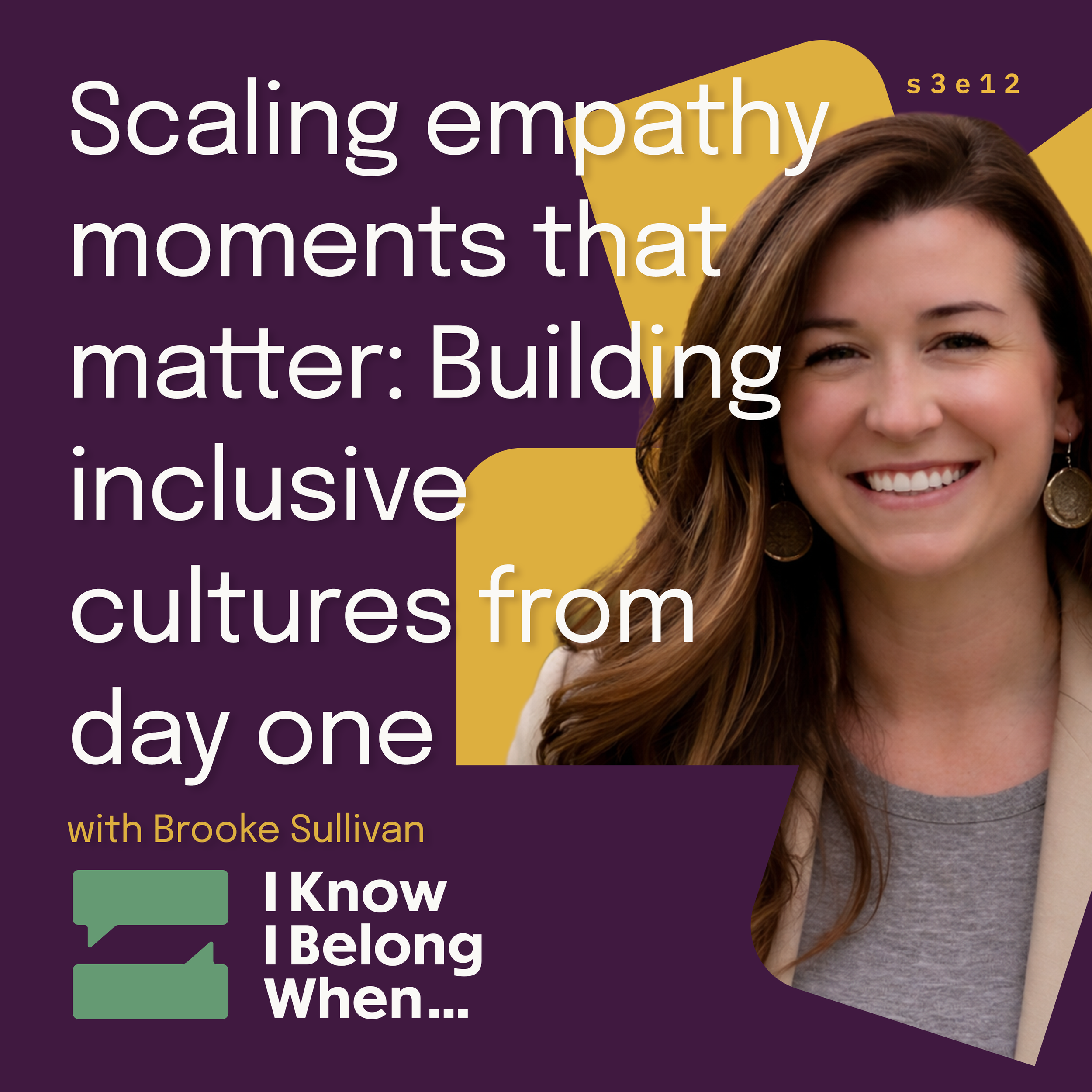
Scaling empathy moments that matter: Building inclusive cultures from day one with Brooke Sullivan
Most leadership advice about artificial intelligence promises the machine will solve your people problems. Sarah A. Scala is in the other room telling executives the opposite. Artificial intelligence will expose them, and she is staying long enough to help fix what surfaces. That is the conversation that Christopher Blyone, host of I Know I Belong When, has on this episode.
Sarah is an award-winning diverse supplier, a global speaker, and a leadership consultant who has spent more than two decades turning inclusion into measurable performance. Not aspirational. Not vibes. Measurable. Fortune 10 companies have hired her. Out and Equal and Lesbians Who Tech have put her on their stages. Her work sits at the intersection most executives are quietly panicking about: emotional intelligence, psychological safety, and how a human leader keeps both alive in the age of artificial intelligence.
This is a working session on authentic leadership, inclusive culture, and how building belonging in the workplace shows up on the bottom line. Sarah walks through what shifts when a coach treats strategic inclusion as a performance strategy rather than a values conversation, why bite-sized trust changes teams faster than any policy rewrite, and what kayaking, hiking, and Nordic skiing teach her about people experience that no boardroom can. Mother Nature humbles. Artificial intelligence exposes. Authentic leadership stays in motion through both.
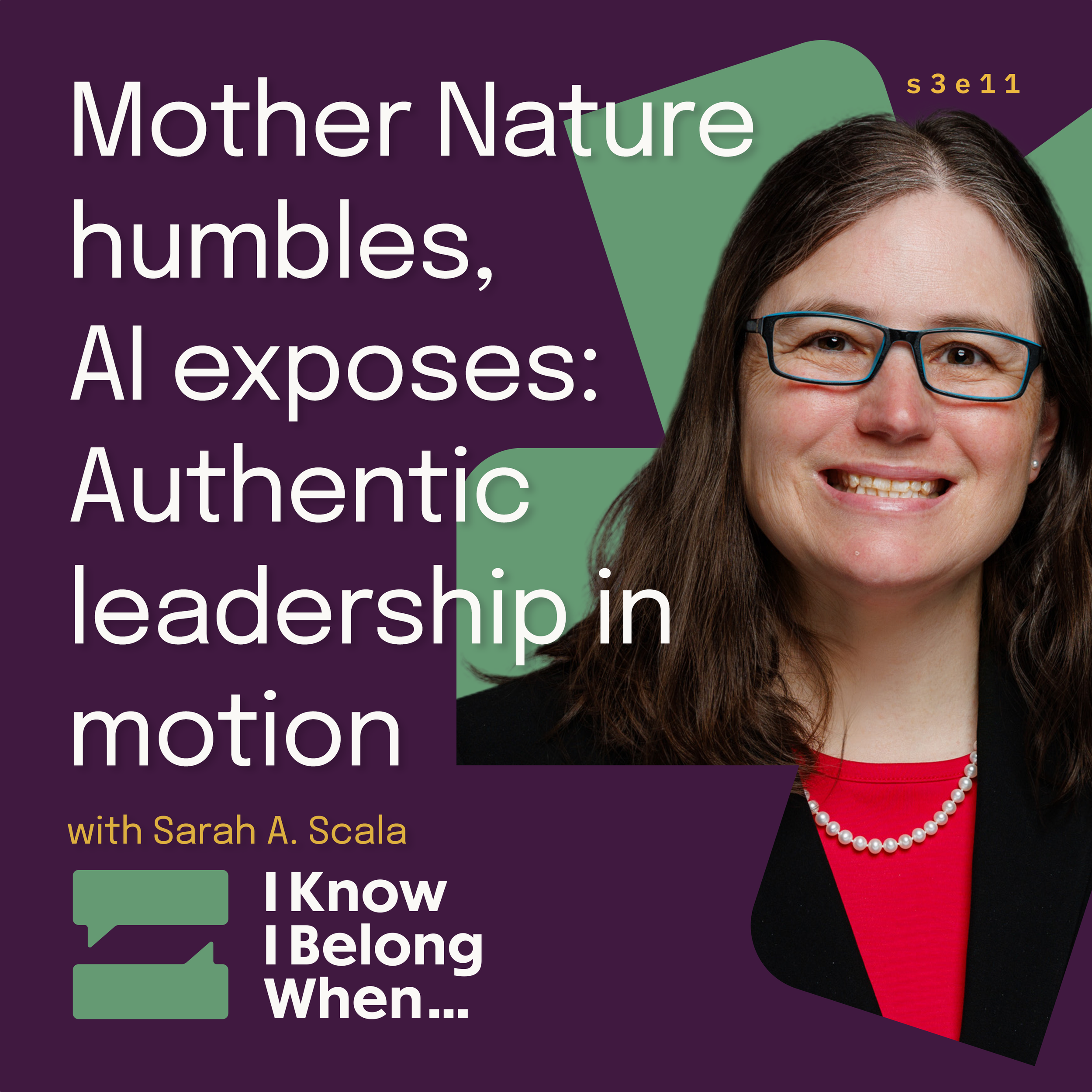
Mother Nature humbles, AI exposes: Authentic leadership in motion with Sarah A. Scala
Most leadership advice about artificial intelligence promises the machine will solve your people problems. Sarah A. Scala is in the other room telling executives the opposite. Artificial intelligence will expose them, and she is staying long enough to help fix what surfaces. That is the conversation that Christopher Blyone, host of I Know I Belong When, has on this episode.
Sarah is an award-winning diverse supplier, a global speaker, and a leadership consultant who has spent more than two decades turning inclusion into measurable performance. Not aspirational. Not vibes. Measurable. Fortune 10 companies have hired her. Out and Equal and Lesbians Who Tech have put her on their stages. Her work sits at the intersection most executives are quietly panicking about: emotional intelligence, psychological safety, and how a human leader keeps both alive in the age of artificial intelligence.
This is a working session on authentic leadership, inclusive culture, and how building belonging in the workplace shows up on the bottom line. Sarah walks through what shifts when a coach treats strategic inclusion as a performance strategy rather than a values conversation, why bite-sized trust changes teams faster than any policy rewrite, and what kayaking, hiking, and Nordic skiing teach her about people experience that no boardroom can. Mother Nature humbles. Artificial intelligence exposes. Authentic leadership stays in motion through both.
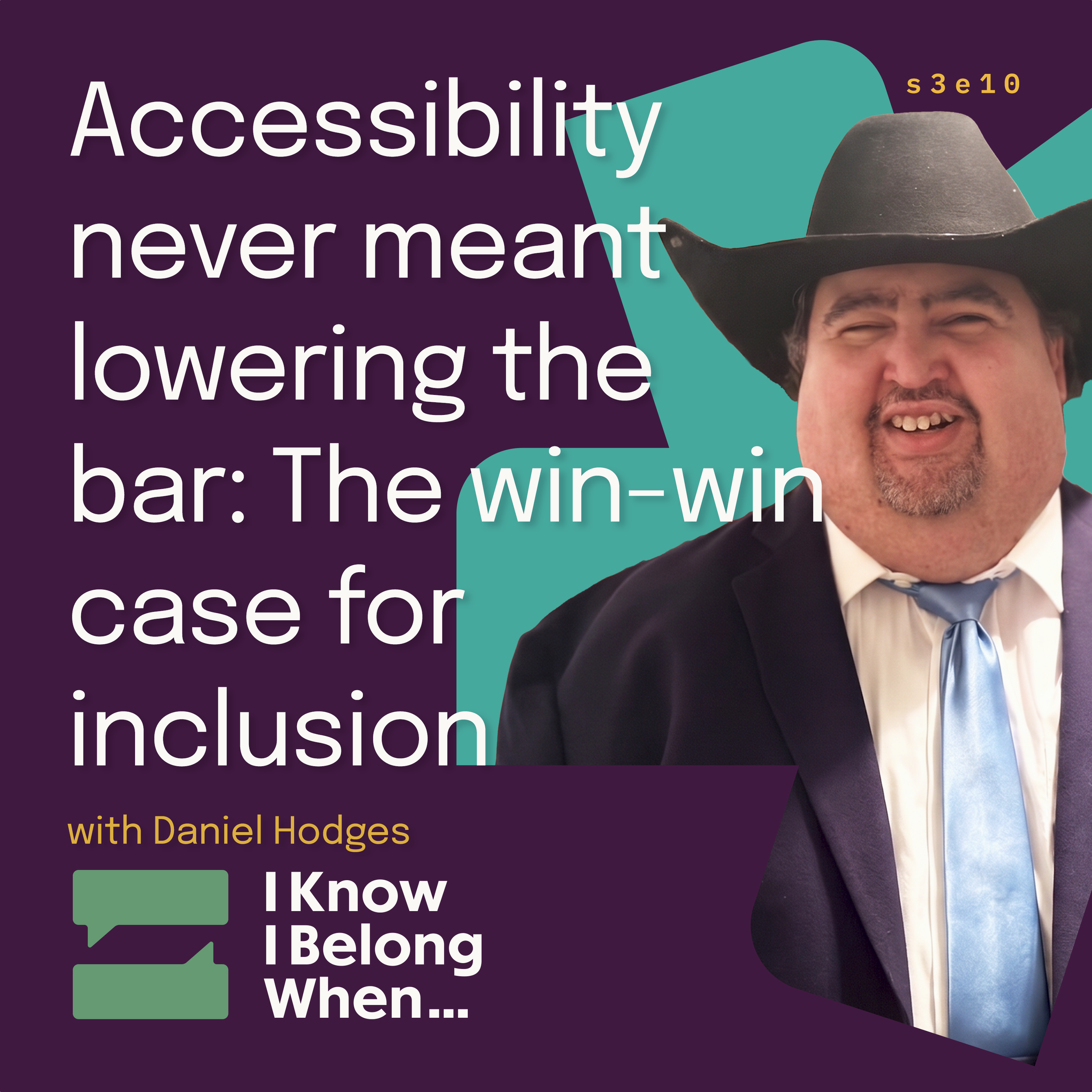
Accessibility never meant lowering the bar: The win-win case for inclusion with Daniel Hodges
What if everything you have been told about accessibility, inclusion, and the so-called trade-off between doing good and doing well is wrong?
In this episode of I Know I Belong When, host Christopher Bylone sits down with Daniel Hodges — lawyer by training, nonprofit founder by calling, and living proof that when someone tells you no road exists, that is simply the opening line of your comeback story. As a kid, Daniel was functionally illiterate. A so-called Blindness Professional once told him the best he could hope for was canning chairs for a living. He went on to earn multiple advanced degrees, launch the Pieces of Me Foundation while still in law school, and build a career dismantling the false paradigm that organizations must choose between accessibility and profit, inclusion and merit.
Daniel lives with blindness, chronic pain, anxiety, and depression, and he refuses to let any of those define his ceiling. His story gives listeners new language for belonging — language rooted in lived experience, authentic leadership, and the conviction that strategic inclusion is not charity, it is good design. Whether you are an HR leader exploring how to create a sense of belonging at work, a manager rethinking belonging in remote teams, or an executive curious about belonging vs inclusion, this conversation delivers practical insight inside one of the most powerful comeback stories you will hear this year.
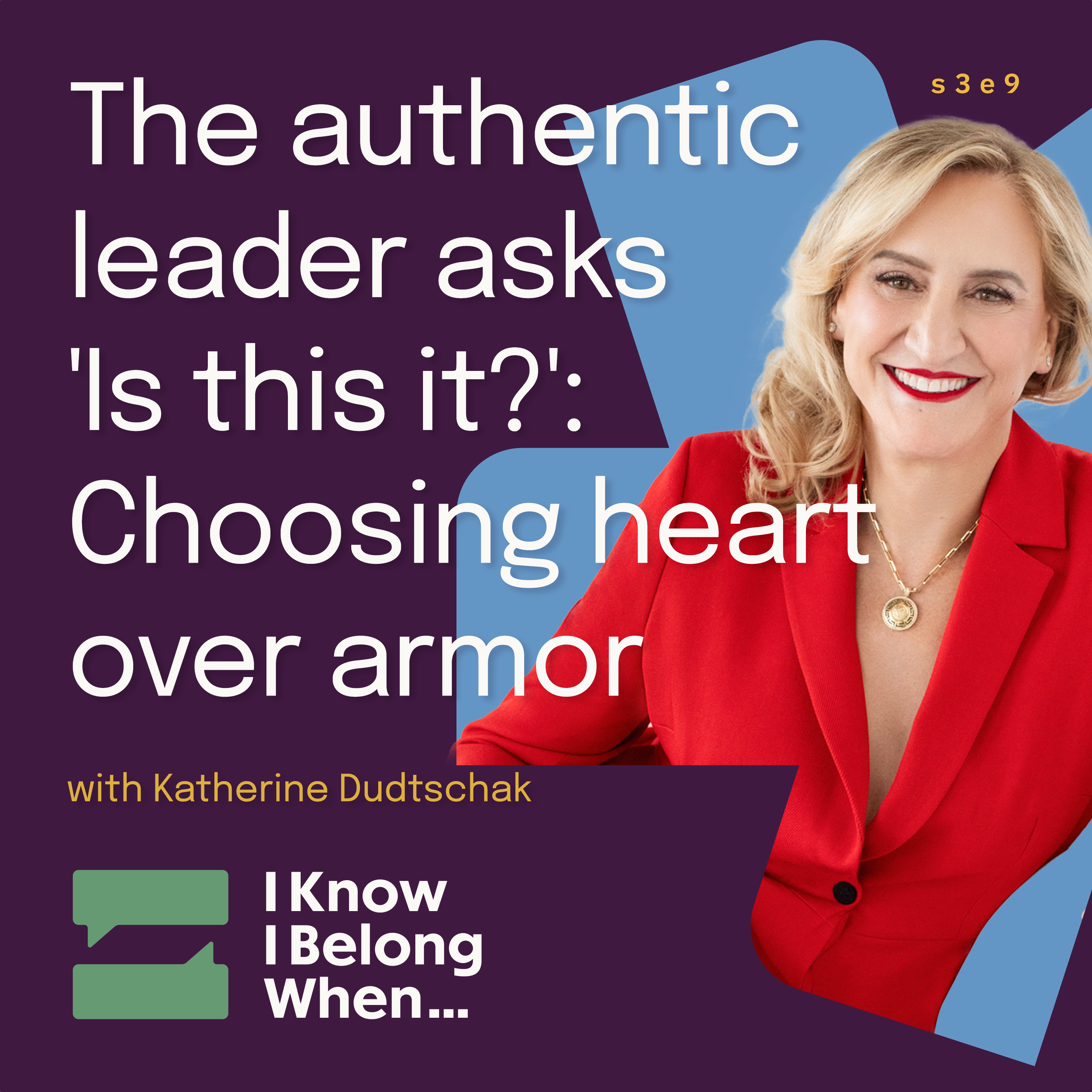
The authentic leader asks Is this it?': Choosing heart over armor with Katherine Dudtschak
What does authentic leadership look like when the person in the corner office decides that the boldest move available is telling the truth about who she is? In this episode of I Know I Belong When, host Christopher Bylone sits down with Katherine Dudtschak, former president and CEO of Home Equity Bank and former executive vice president at RBC, to explore what happens when more than thirty years of elite corporate performance meet a choice to integrate rather than fragment.
Katherine is the creator of the Sincerely framework and a conscious leadership advisor who guides executives and founders from survival-based identity to essence-led leadership. She serves the leader who has the title, the resume, the followers, and is still quietly asking, "Is this it?"
In this conversation, Katherine walks listeners through the moment she publicly came out as a woman in front of 80,000 colleagues while still in executive leadership, and what that decision unlocked for her, the people around her, and the culture she helped shape. She speaks plainly about command-and-control giving way to heart-centered leadership, vulnerability as strategic power, and why an inclusive culture is built from the inside of the leader outward.
This is a master class in authentic leadership, workplace belonging, and the cost of leading from armor rather than essence.
Everyday bias, rewritten: AI, attention, and the next generation with Jake Ross
What does it really take to create belonging in the workplace when pressure rises, resistance shows up, and silence feels safer than speaking up?
In this episode of I Know I Belong When…, host Christopher Bylone sits down with Mike Davis, a global diversity and inclusion executive with nearly three decades of experience navigating the hardest conversations organizations avoid. This is not a surface‑level conversation about inclusion. It is a human, honest exploration of moral courage, authentic leadership, and what it actually means to build inclusive culture when the stakes are real.
Mike brings storytelling, lived experience, and deep credibility to a topic leaders are struggling to name. Through personal reflection, professional insight, and powerful moments of truth, this episode gives listeners language for belonging and clarity on why silence in leadership is never neutral. From white male allyship to accountability without shame, from psychological safety to trust repair, this conversation reframes workplace belonging as the outcome of strategic inclusion, not a feel‑good initiative.
If you are searching for another word for belong, questioning how love and belonging needs show up at work, or wondering how to create a sense of belonging at work in uncertain times, this episode delivers both language and direction.
Everyday bias, revisited: A father, a son, and the work of honoring humanity with Howard Ross
What does it really take to create belonging in the workplace when pressure rises, resistance shows up, and silence feels safer than speaking up?
In this episode of I Know I Belong When…, host Christopher Bylone sits down with Mike Davis, a global diversity and inclusion executive with nearly three decades of experience navigating the hardest conversations organizations avoid. This is not a surface‑level conversation about inclusion. It is a human, honest exploration of moral courage, authentic leadership, and what it actually means to build inclusive culture when the stakes are real.
Mike brings storytelling, lived experience, and deep credibility to a topic leaders are struggling to name. Through personal reflection, professional insight, and powerful moments of truth, this episode gives listeners language for belonging and clarity on why silence in leadership is never neutral. From white male allyship to accountability without shame, from psychological safety to trust repair, this conversation reframes workplace belonging as the outcome of strategic inclusion, not a feel‑good initiative.
If you are searching for another word for belong, questioning how love and belonging needs show up at work, or wondering how to create a sense of belonging at work in uncertain times, this episode delivers both language and direction.
Silence is not neutral: Moral courage and inclusive leadership with Mike Davis
What does it really take to create belonging in the workplace when pressure rises, resistance shows up, and silence feels safer than speaking up?
In this episode of I Know I Belong When…, host Christopher Bylone sits down with Mike Davis, a global diversity and inclusion executive with nearly three decades of experience navigating the hardest conversations organizations avoid. This is not a surface‑level conversation about inclusion. It is a human, honest exploration of moral courage, authentic leadership, and what it actually means to build inclusive culture when the stakes are real.
Mike brings storytelling, lived experience, and deep credibility to a topic leaders are struggling to name. Through personal reflection, professional insight, and powerful moments of truth, this episode gives listeners language for belonging and clarity on why silence in leadership is never neutral. From white male allyship to accountability without shame, from psychological safety to trust repair, this conversation reframes workplace belonging as the outcome of strategic inclusion, not a feel‑good initiative.
If you are searching for another word for belong, questioning how love and belonging needs show up at work, or wondering how to create a sense of belonging at work in uncertain times, this episode delivers both language and direction.