
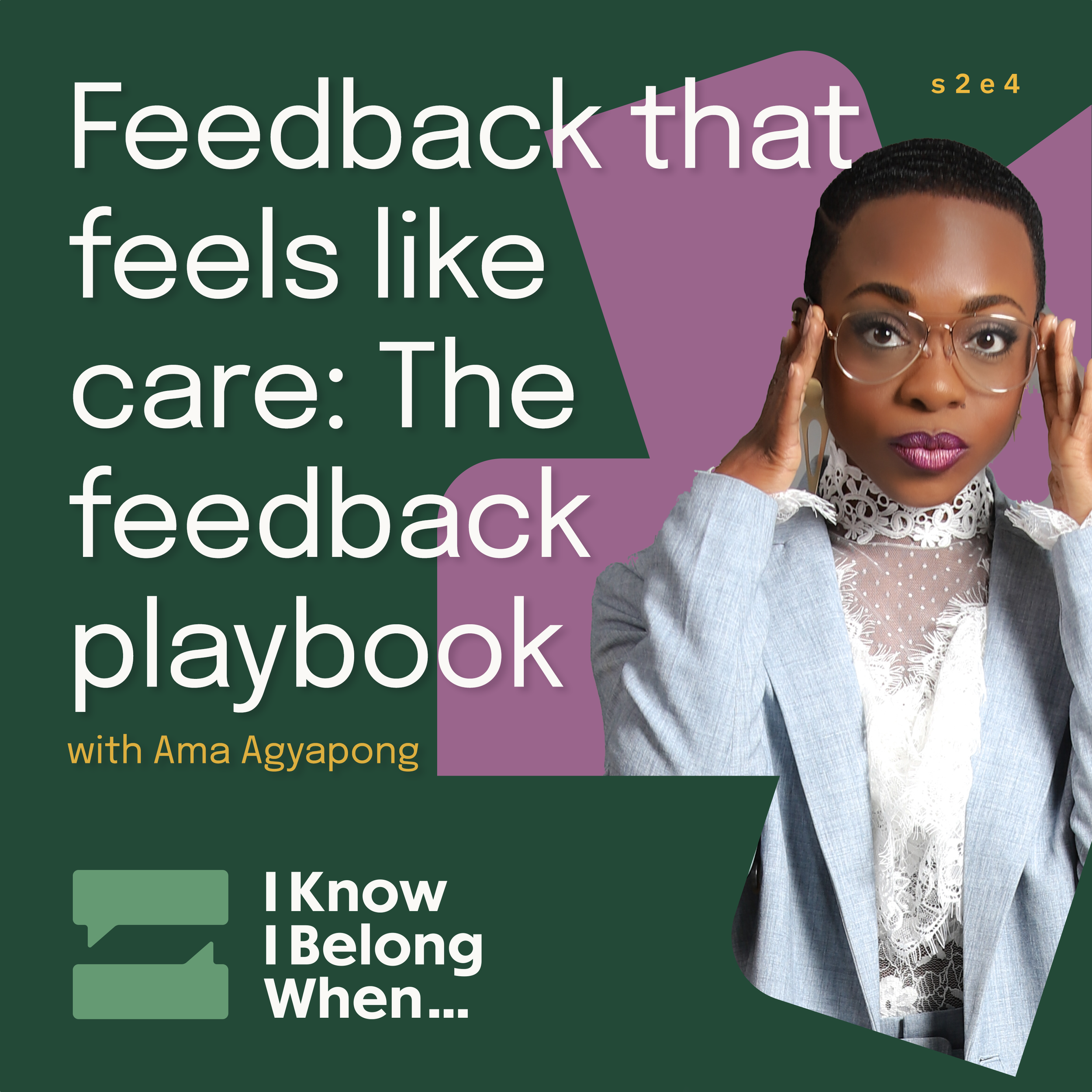
Feedback that feels like care: The feedback playbook with Ama Agyapong
Engage through your podcast player of choice!
What if feedback felt like care—clear enough to guide, kind enough to grow, and courageous enough to build a sense of belonging at work? In this episode of I Know I Belong When, host Christopher Bylone welcomes Ama Agyapong—the “feedback guru” and “that inclusion lady”—to turn buzzwords into behavior and inclusive culture into daily practice. Through lived experience as an athlete, facilitator, and executive coach, Ama shows how authentic leadership recognizes names, honors stories, and uses feedback as a vehicle for love, accountability, and advancement. Together, they explore belonging vs inclusion, the power of curiosity, and the responsibility leaders carry to land with care—because being “right” is not the same as being effective.
You will hear a practical playbook for creating belonging at work: micro‑habits like a sincere “good morning,” rituals that strengthen trust, and feedback loops that share information during the process—not only at the end. Whether you are building belonging in hybrid settings or belonging in remote teams, this conversation gives you language and structure to elevate people’s experience and drive human‑centered innovation. Rooted in “love & belonging needs,” it is a reminder that workplace belonging is not a destination—it is a practice leaders model, teams feel, and cultures sustain. If you have ever asked, “I know I belong when…?” this episode helps you answer—and scale—the how.
Watch the full episode :
Must-hear insights & key moments
Feedback as care: Correction signals commitment; feedback builds trust when it is clear, consistent, and compassionate.
Names & humility: Belonging begins with pronunciation—and deepens in how we recover from missteps with grace.
Right vs. effective: Choose landing well over being “right” to sustain inclusive culture and performance.
Curiosity rituals: Ask crafted, open‑ended questions; notice the unspoken; document follow‑ups to elevate people experience.
Share information reliably: Communicate updates during the journey to strengthen psychological safety and trust.
Micro‑habits that matter: Say “good morning,” mean it, and linger to hear the real answer—on site or across remote teams.
Act on feedback: Close the loop visibly; asking without action erodes workplace belonging.
Ama’ Standout Quotes:
“Do you want to be right, or do you want to be effective?”
“If you correct me, you care—and you want to see me get better.”
“See me and see my unlimited potential… feedback is a vehicle in which to do that.”
“The connection really happens in how you recover from the mistake.”
“Include people in the decision‑making so they see themselves in the solution.”
“Say good morning. Speak—and stick around long enough to hear a response.”
“I know I belong when someone is listening to me and we can laugh together.”
Why this episode matters
Belonging is the outcome of IDEA work—not another pillar. Ama’s story gives leaders practical language and structures for how to create a sense of belonging at work—from curiosity rituals to reliable updates and inclusive decision‑making. It is a usable roadmap for strategic inclusion that transforms feedback into care, strengthens trust, and powers cultures where people are invited, seen, heard, and needed.
Who should listen
HR leaders, DEI/IDEA practitioners, people managers, and executives shaping hybrid or remote teams. Anyone seeking clarity on belonging vs inclusion and ready to apply micro‑habits that elevate people experience and workplace belonging. If you design culture, lead projects, or coach talent, this episode equips you to build human‑centered systems where feedback fuels growth.