
Engage through your podcast player of choice!
Belonging is not a prize waiting at the end of a promotion, and it does not only happen at work. It happens in the rooms where another person decides whether to unlock the door for you.
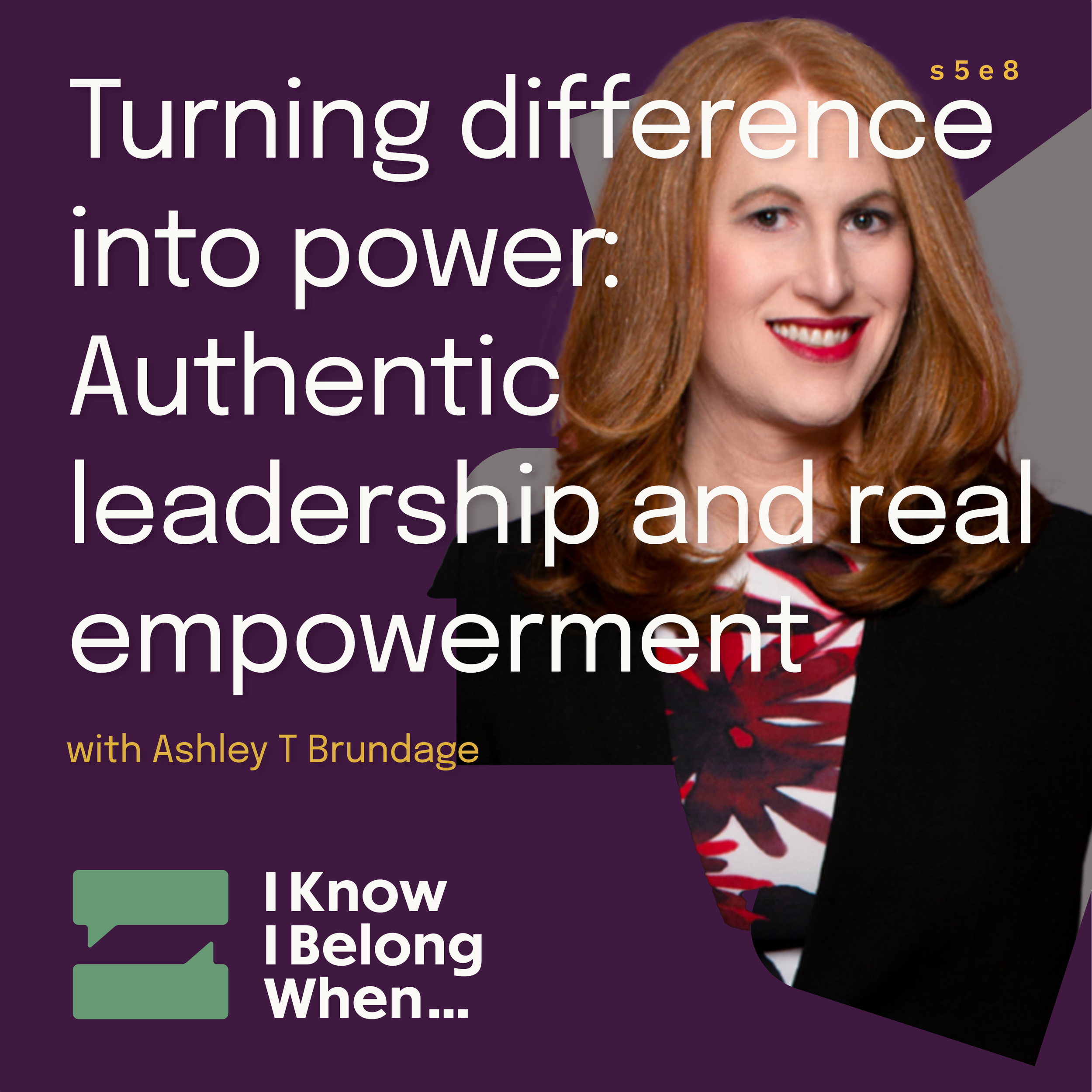
In this episode of I Know I Belong When…, Ashley T. Brundage joins host Christopher Bylone for a conversation about what becomes possible when a person stops hiding what makes them different and treats it as a source of power. Ashley is the President and CEO of Empowering Differences, author of the award-winning book Empowering Differences, and a proud out woman of transgender lived experience. She began her second career as a means of survival while fighting discrimination, harassment, and homelessness. She had more than forty job interviews before one ended in a job offer. Less than five years after being hired as a part-time bank teller, she was the national vice president of diversity and inclusion at PNC Bank.
Ashley describes the interview where a locked door became an open one, and a night in Lower Manhattan where a venue refused her and a friend for hours while admitting everyone else. Those two moments show how belonging gets built, how it gets denied, and why measuring empowerment is the work underneath an inclusive culture and authentic leadership.
Watch the full episode :
Must-hear insights & key moments
The fortieth interview: thirty-nine before it ended in rejection, doors closed in her face, once a call to the police, so a manager unlocking the door became the first evidence that this room might be different
The honest question that changed her career: told she was overqualified for the teller role and asked why she wanted it, Ashley answered with a plan to move rapidly through the organization and change how people recognize people like her
Difference as the opening rather than the obstacle: why Ashley scores her own gender empowerment at one hundred out of one hundred, and how being honest about her identity made customers willing to talk about their money
Her four-step empowerment process: know yourself, get to know people who are different from you, build a strategy for which differences need support, and take leadership actions you can measure
A night in Lower Manhattan: refused at a nightclub door for hours in eighteen-degree weather while others were admitted, and the groups inside who tried to claim her as their guest
How Ashley creates belonging for others: she asks what empowerment means to the person in front of her, then builds a connection meant to last
One action for this week: socioeconomic class empowerment is among the two lowest in her research, and resource allocation is where she says to begin
Julie’s standout quotes:
"I see my gender as my ultimate strength."
"I used that ability when I was a banker at the bank to have a serious conversation about someone's finances because I was willing to have a serious conversation about my identity, and so that builds trust with people."
"I actually had more than 40 job interviews as a proud out woman of transgender lived experience."
"I'm gonna systematically change the way that people look at people like me."
"I know I belong when people understand and measure their own empowerment"
Why this episode matters
Most advice about difference says manage it or minimize it. Ashley offers the opposite instruction, with receipts: a career built by being honest first, and a method other people can use. She also makes empowerment measurable, which moves belonging out of sentiment and into something a person, a family, or an organization can track.
Who should listen
Anyone working out who they are and what their differences make possible. Parents and people building a home or a chosen family. Students, career changers, and anyone starting over without a degree. Community builders and organizers. HR leaders, people managers, and inclusion practitioners who want strategic inclusion to mean something measurable. Anyone searching for language to name belonging in everyday life.