
Engage through your podcast player of choice!
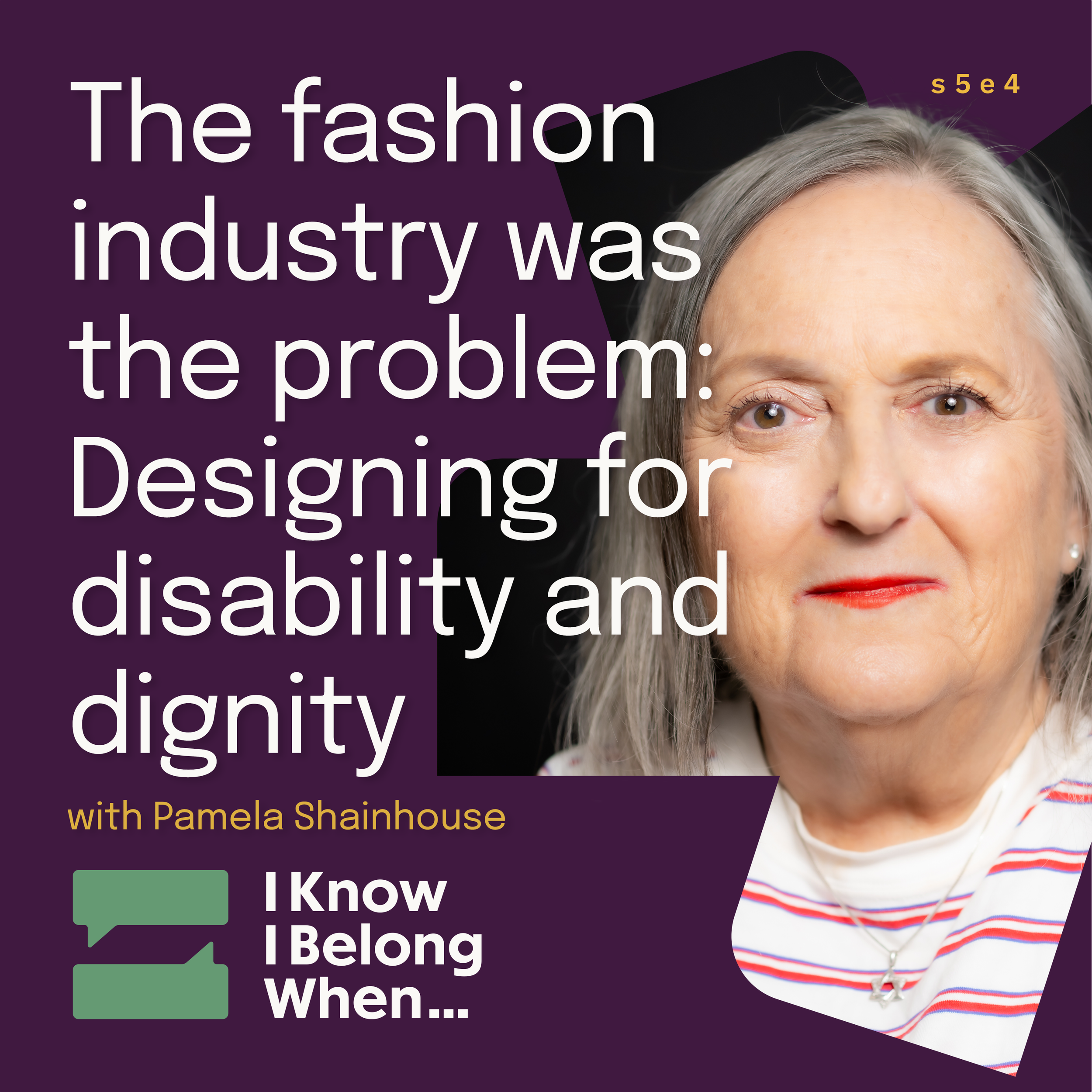
Belonging does not begin at the office. It begins in the mirror, in the clothes that do or do not fit, and in whether the room was built with you in mind. On this episode of I Know I Belong When…, host Christopher Bylone sits down with Pamela Shainhouse, an entrepreneur, accessibility advocate, and lifelong fundraiser who spent a career proving that the people the world leaves out were never the problem. The design was.
Pamela built Canada’s first size-diverse and sustainable fashion brand years before inclusive design had a name, brought it to the runway at Toronto Fashion Week, and later founded a consultancy that helps organizations treat accessibility as a daily practice rather than a slogan. Her story moves across the arenas of a whole life: the private work of self-worth, the structural reality of disability in public space, and the family legacy that still drives her. This is a conversation about building belonging in everyday life, about authentic leadership earned the hard way, and about the language that lets a person name a sense of belonging that reaches far past any workplace.
Christopher, Principal Strategist of Innovation Unbiased and a voice in people experience and strategic inclusion, draws out how Pamela turned exclusion into design, grief into a mission, and decades of imposter syndrome into the moment she knew she belonged exactly where she stood.
Watch the full episode :
Must-hear insights & key moments
The reframe that opens the show: why the fashion industry, and not the body, was the thing that needed to change, and what Pamela built instead
The story behind her name, and why she reclaimed her father’s legacy after her divorce when she could have let it go
The runway moment with model Whitney Thompson when years of imposter syndrome lifted and she knew the work was hers
What exclusion looks like in practice: event design, back-of-room seating, and what it takes to move a walker through a crowd of five hundred
How curb cuts explain accessibility as something that serves everyone, from a parent with a stroller to a traveler with a bag
The origin of her fashion line in her daughter Ally’s story, and the charity that now carries Ally’s name
Her closing challenge to organizations to make access a line in the budget rather than an afterthought
Pamela’s standout quotes:
“we should all belong, and we should all belong in the same room all together”
“our money looks exactly like anybody else’s”
“Mommy, I don’t feel like wearing poly and ester from China”
“Do you know what it’s like to push a walker through 500 people in a small room”
“I don’t know what the hell’s wrong with you, but nobody sees what you see, so smarten the hell up”
“I build my life in testimony to my daughter”
“I know I belonged when I looked in that mirror and realized that I am who I am, and I’m happy to be that person”
Why this episode matters
Belonging is often sold as a workplace perk. Pamela’s story puts it back where it actually lives, in self-worth, in the design of public space, and in the choices that decide who gets through the door. She gives listeners plain language for the difference between being tolerated and being built for, and she shows that creating belonging in everyday life is a practice anyone can start. The result is a sense of belonging that holds up at home, in community, and in every system a person has to navigate.
Who should listen
This episode is for anyone, not only people leaders. For the person still working out who they are. For parents and anyone building a home or a chosen family. For disabled people and the allies who want to show up better. For community organizers and people of faith. For HR leaders, people managers, and inclusion practitioners building inclusive culture on real teams. For designers, founders, and anyone who shapes a space others have to live in. And for anyone searching for the words to name belonging in their own life.