
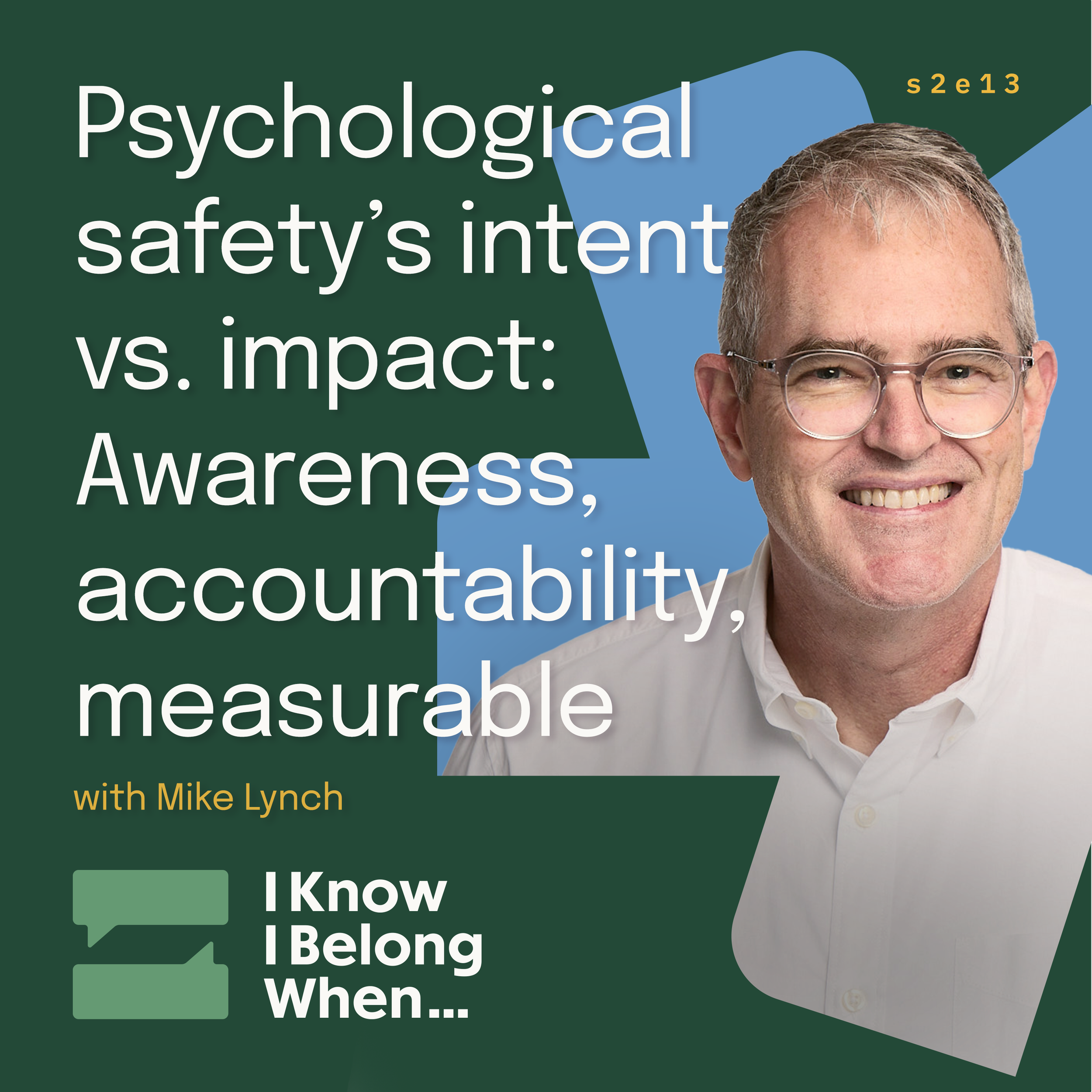
Psychological safety’s intent vs. impact: Awareness, accountability, measurable with Mike Lynch
Engage through your podcast player of choice!
Psychological safety is often treated as a feeling. This episode turns it into a leadership practice you can name, measure, and repeat.
In this episode, host Christopher Bylone welcomes Mike Lynch, founder of MJL Consulting Group and author of From Ally to All In, for a human, leadership-credible conversation on belonging in the workplace and what it takes to move from supportive intentions to creating belonging at work through visible impact.
Together, they explore building belonging as the outcome of IDEA work: not a slogan, not a checkbox, and not performative inclusion. You will hear how authentic leadership shows up in everyday moments that shape workplace belonging and people experience: getting someone’s name right, repairing harm without centering yourself, and using influence to amplify voices that are not being heard. The result is language for belonging that helps teams build an inclusive culture, practice strategic inclusion, and apply human-centered innovation across roles, remote or in person.
If you have been searching for synonyms of belonging, another word for belong, or how love and belonging show up inside leadership decisions, this story-driven episode gives you vocabulary plus next actions. It is also a guide for belonging vs inclusion: what is the difference, and why workplace belonging depends on intent and impact in equal measure. This is the heart of I Know I Belong When: stories that help you say, “I know I belong when …” and then lead with that truth.
Watch the full episode :
Must-hear insights & key moments
Why believing in inclusion is not the same as advancing it, and how leaders shift from allyship to all in action.
A practical repair loop: correct quickly and cleanly, repair privately, then change systems so harm does not repeat.
How to create a sense of belonging at work when conversations get messy: stay at the table, stay grounded, stay accountable.
The “open door” myth, and a measurable alternative: listening sessions, theme tracking, and closing the feedback loop.
Human-centered innovation in meetings: track distribution of airtime so decision power is shared.
Beyond engagement scores: promotion velocity and retention patterns as signals of workplace belonging.
Sponsorship that changes outcomes: using political capital to create visibility and opportunity for others.
Mike’s standout quotes:
“Believing in inclusion was not the same as advancing it.”
“Allyship can be passive, however, leadership is really active.”
“Correct quickly and cleanly.”
“Intent is invisible, however impact is measurable.”
“Accountability is not punishment, it is really around improvement.”
“Amplification is the awareness with a megaphone.”
“Belonging is not about comfort. It is about contribution.”
Why this episode matters
Psychological safety and workplace belonging rise or fall on the gap between intent and impact. This episode offers language for belonging that leaders can use to reduce harm, increase trust, and build belonging in remote teams and in-person cultures through measurable behaviors, not performative promises.
Who should listen
HR and people leaders shaping inclusive culture, DEI and IDEA practitioners driving strategic inclusion, managers building belonging across remote or hybrid teams, and anyone who wants practical guidance on how to create a sense of belonging at work while practicing authentic leadership with accountability.