
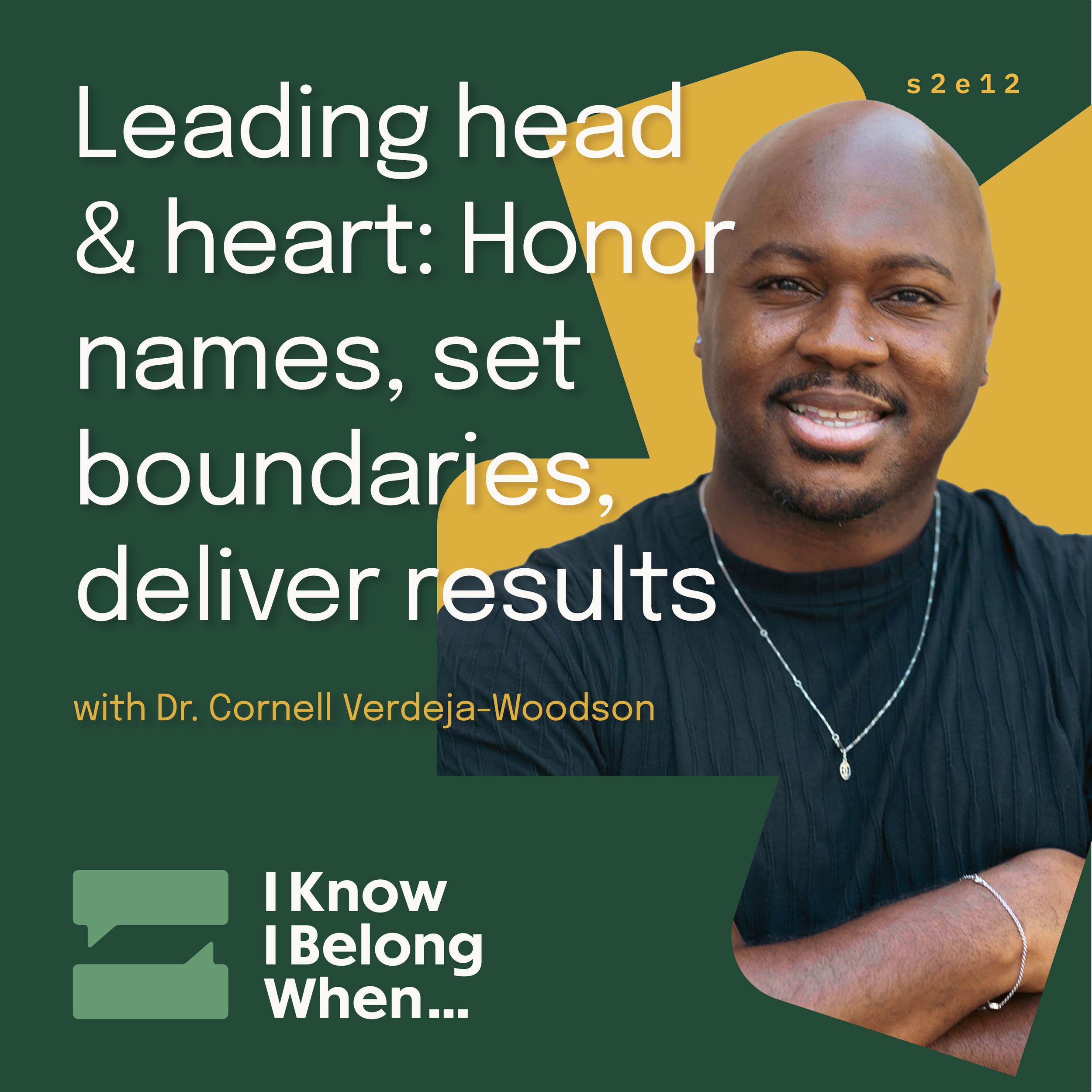
Leading head & heart: Honor names, set boundaries, deliver results with Dr. Cornell Verdeja‑Woodson
Engage through your podcast player of choice!
Belonging in the workplace is not a slogan. It is the lived experience of being invited, seen, heard, and needed. In this episode of I Know I Belong When, host Christopher Bylone sits with Dr. Cornell Verdeja-Woodson, former head of DEIB and talent development at Pixar Animation Studios and an organizational change leader. Together, they turn workplace belonging into leadership practices you can repeat: honor names, clarify values, set boundaries, and still deliver results.
If you have searched for synonyms of belonging or another word for belong, you are not alone. People want language for belonging, especially in remote and hybrid teams where signals can get lost in messages and meetings. Cornell offers first-person stories that make inclusive culture feel doable, tying authentic leadership to love and belonging needs and to people’s experience outcomes. When you listen, you can finish the sentence “I know I belong when” with actions, not abstractions. This is strategic inclusion for anyone focused on building belonging through human-centered innovation, where IDEA work is the engine and creating belonging at work is the outcome. Bring a notebook, then share it.
Watch the full episode :
Must-hear insights & key moments
Burnout often starts as misalignment with purpose and values, so pause and re-align.
Protect your peace with boundaries, even when you cannot leave the job.
Name practices are belonging practices: nicknames without consent erode trust.
Self-belonging comes first, then you can build belonging in the workplace with others.
Early non-belonging data: body tension, masking, and rewriting emails out of fear.
Durable metrics: who stays, who engages, and who participates beyond the minimum.
Leading with head and heart includes caring with limits, then connecting support to resources.
Dr. Cornell’s standout quotes:
“Belonging does not necessarily always come externally. It actually starts internally.”
“When you do not honor that name, it actually makes people feel like they do not belong, like you do not see me.”
“Mistakes happen. People mispronounce things and that is okay. Are you putting in the effort to get it right?”
“If you are waiting for the world to make you feel like you belong, you will be waiting for a long time.”
“I feel it in my body. I feel uneasy. I find myself masking certain things.”
“If we are not feeling safe, we will go on to the next thing.”
“I am not your therapist. I am not your coach.”
Why this episode matters
IBelonging vs inclusion is a common confusion: inclusion is what leaders do, belonging is what people feel. This conversation provides a clear bridge from intent to impact, along with a grounded view of how to foster a sense of belonging at work without turning it into a vibe. You will leave with language for real-time moments and metrics that keep workplace belonging accountable.
Who should listen
People leaders, HR and DEI practitioners, and culture builders who want to build belonging to show up in everyday moments. Managers supporting belonging in remote teams where belonging is easier to misread. Anyone repairing trust after a name mistake, a missed cue, or a creeping sense of non-belonging. If you want a stronger sense of belonging at work, a clearer answer to “how to create a sense of belonging at work,” and a leadership approach that honors head and heart, this episode is your playbook.