
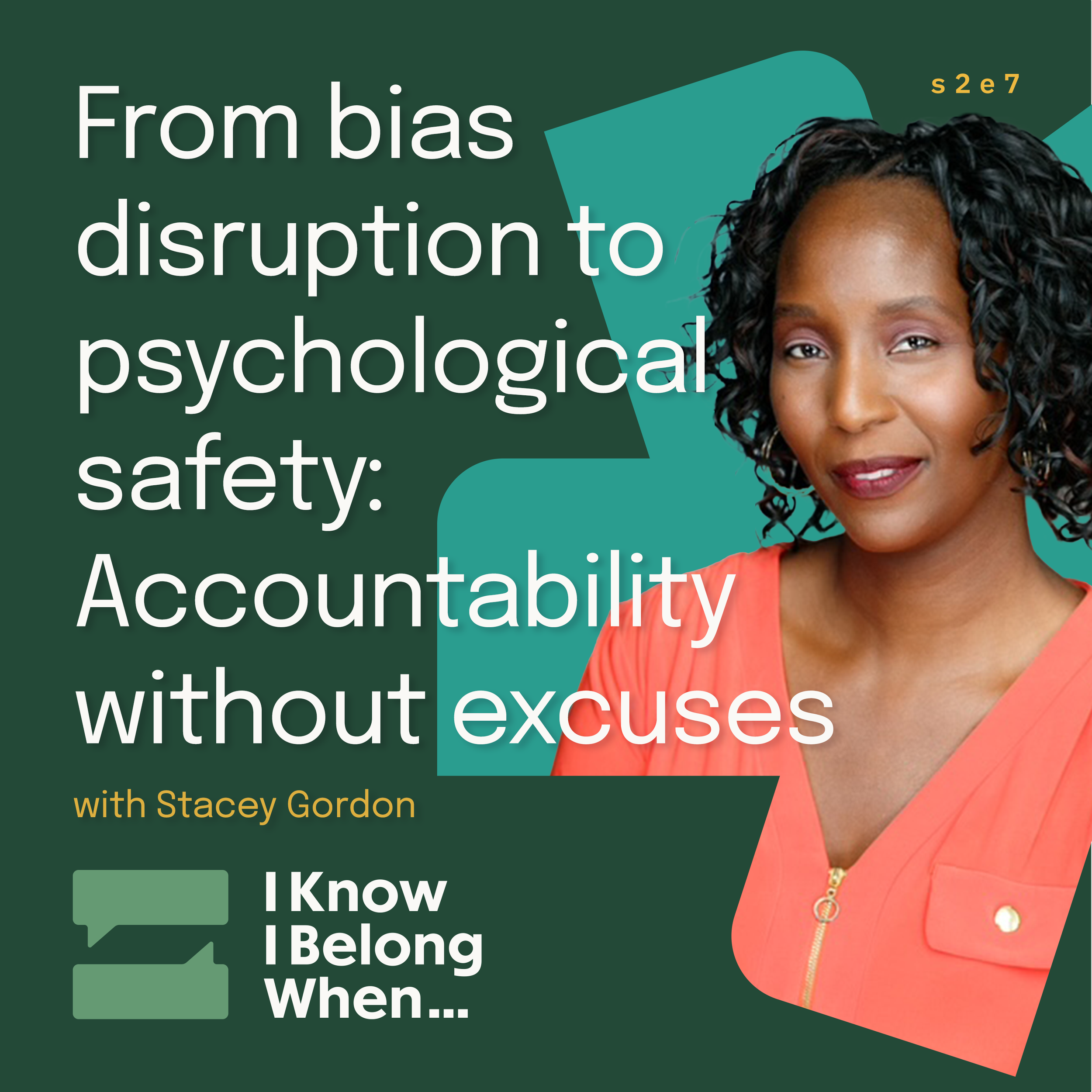
From bias disruption to psychological safety: Accountability without excuses with Stacey Gordon
Engage through your podcast player of choice!
Belonging at work is not created by good intentions. It is created through decisions, accountability, and everyday actions that either invite people in or quietly push them out. In this episode of I Know I Belong When, host Christopher Bylone is joined by Stacey Gordon, globally recognized bias disruptor, author of Unbias, and a trusted voice in authentic leadership and people experience design.
This conversation goes beyond performative inclusion and explores what it truly means to build belonging in the workplace. Stacey brings clarity, credibility, and lived experience to questions many leaders avoid: How do we create psychological safety without lowering standards? What does accountability look like when leaders stop making excuses? How does inclusion become a habit rather than a slogan?
Through first-person storytelling, Stacey shares the moments she knew she belonged, the moments she clearly did not, and how those experiences shaped her belief that workplace belonging is the outcome of intentional inclusion, not a standalone initiative. This episode gives listeners language for belonging, especially those searching for synonyms of belonging, another word for belong, or ways to connect love and belonging needs to real workplace practice.
If you are navigating belonging vs inclusion, leading remote or hybrid teams, or trying to create a sense of belonging at work that actually lasts, this conversation offers grounded insight, practical clarity, and human-centered innovation rooted in reality.
Watch the full episode :
Must-hear insights & key moments
Why belonging is the result of inclusion, not something leaders can declare
How psychological safety is built through honest feedback and trust
The overlooked role of accountability in workplace belonging
Why getting names right is a leadership practice, not a courtesy
How bias disruption requires discomfort without shame
What happens when leaders avoid hard conversations and who pays the price
How belonging in the workplace connects directly to retention and performance
Stacey’s Standout Quotes:
“Belonging is not something you can make happen. Inclusion is the action, and belonging is the result.”
“If you cannot say my name correctly, what kind of relationship do we have?”
“Trust is built through the small things, and it is eroded very quickly.”
“Psychological safety means I can say this is not working and we can fix it together.”
“We know how to do accountability. The real question is whether we want to.”
“When people keep leaving and the manager stays, that is not a people problem.”
“I know I belong when I do not have to code switch and I can be my authentic self.”
Why this episode matters
Many organizations invest in inclusion initiatives without understanding why belonging still feels out of reach. This episode reframes belonging as the measurable outcome of strategic inclusion, ethical leadership, and accountability without excuses. Stacey’s story offers leaders and practitioners language for belonging that is practical, human, and grounded in real workplace dynamics. For anyone exploring how to create a sense of belonging at work, this conversation provides clarity without comfort-seeking narratives.
Who should listen
This episode is for HR leaders, DEI practitioners, team managers, and executives who want more than surface-level solutions. It is for those building belonging in remote teams, navigating people experience challenges, or questioning the difference between belonging and inclusion. It is also for individuals seeking words to describe their own love and belonging needs at work. If you are committed to creating belonging at work through authentic leadership and accountability, this episode is for you.