
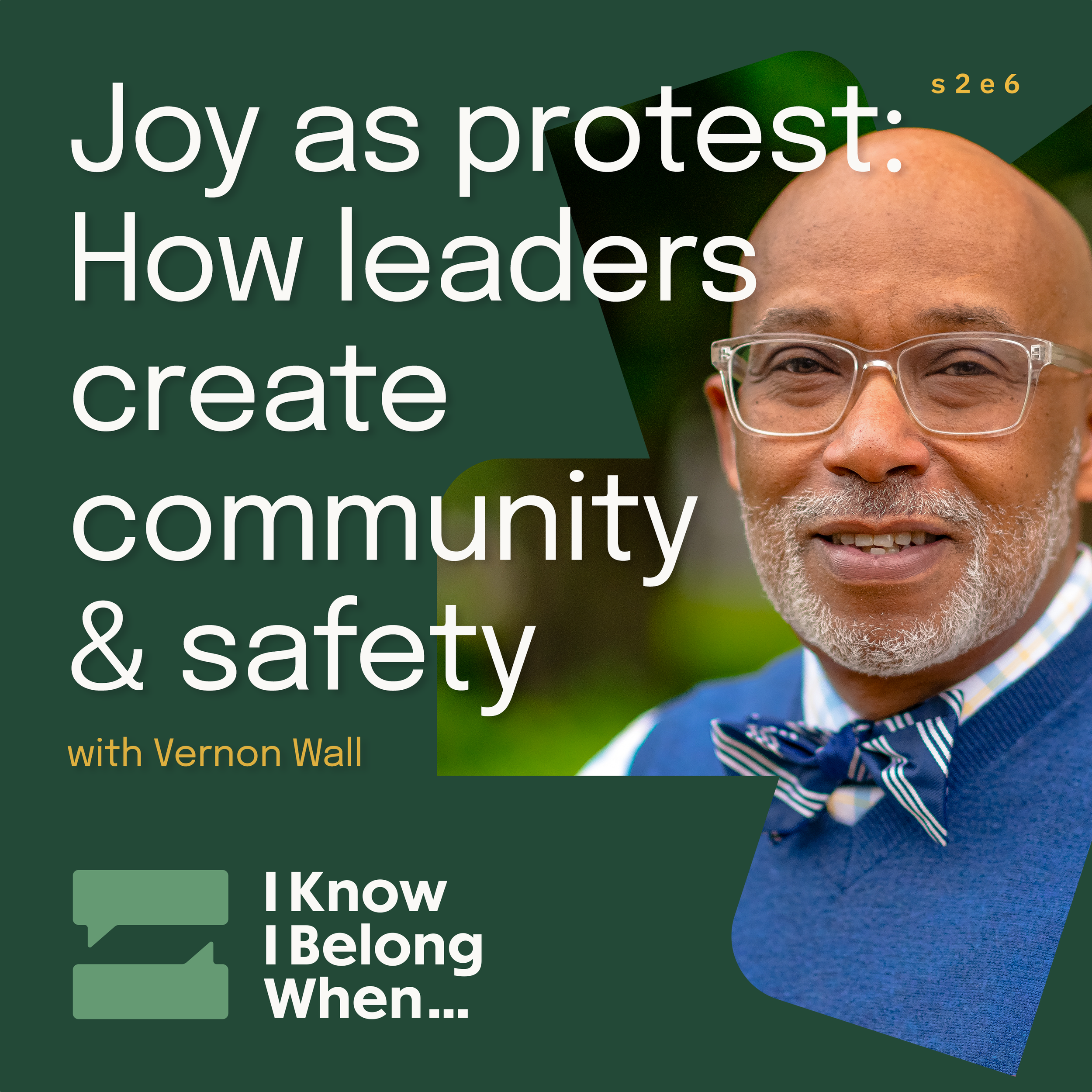
Joy as protest: How leaders create community & safety with Vernon Wall
Engage through your podcast player of choice!
Joy is not a distraction from the work of inclusion; joy is the work. In this energizing conversation, Vernon Wall invites leaders to treat joy as protest, community as strategy, and belonging as a practice. From his decades shaping inclusive culture in higher education to real‑time lessons from Semester at Sea, Vernon offers language for belonging that is honest, tender, and actionable. Listeners will hear how authentic leadership transforms people’s experience, why storytelling powers human‑centered innovation, and how to create belonging in the workplace when the climate feels hostile.
Christopher and Vernon translate campus wisdom to teams and organizations, clarifying the difference between belonging vs inclusion and positioning belonging as the outcome of IDEA work, not just another pillar. If you lead people, support remote teams, or are searching for words to name “I know I belong when…,” this episode gives you a practical toolkit for building belonging at work and in life. You will walk away with phrases you can use in meetings, one‑on‑ones, and town halls, plus field‑tested ways to create psychological safety, set community norms, and respond to resistance with clarity and care. This is strategic inclusion with a heartbeat—anchored in first‑person storytelling that helps everyone know they are invited, seen, heard, and needed.
Watch the full episode :
Must-hear insights & key moments
Joy as protest: why sustaining joy fuels inclusive culture and workplace belonging, especially in crisis.
Relationships first: Vernon’s principle that the person in front of me is not my enemy, and how that reframes conflict at work.
Ghana, safety, and solidarity: a powerful guide to creating belonging in hostile contexts through practical allyship and clear safety norms.
From campus to company: translating residence life lessons into human‑centered leadership for hybrid and remote teams.
Belonging vs inclusion: language leaders can use to explain the difference and measure the people experience that follows.
Storytelling as strategy: how first‑person narratives accelerate strategic inclusion and build community across difference.
Movement and resistance: navigating backlash without losing values or voice; how to create a sense of belonging at work in hard seasons.
Vernon’s Standout Quotes:
“Joy is our form of protest.”
“The person in front of me is not my enemy.”
“I just want to know people’s stories.”
“We do it through storytelling.”
“I will never work on a plane.”
“I know that I belong when I feel that I can just be.”
“You cannot have a movement without resistance.”
Why this episode matters
Organizations are searching for language to talk about belonging and for tools that move beyond statements to daily practices. Vernon shows leaders how to build belonging in the workplace through rituals of care, clear safety guidance, and relationship‑centered management. The episode connects love and belonging needs from Maslow’s hierarchy to modern people experience, reframes strategic inclusion as the path to human‑centered innovation, and offers immediate ways to strengthen inclusive culture in meetings, feedback, onboarding, and team rituals—on‑site and in remote or hybrid teams.
Who should listen
People leaders, HR and DEI practitioners, ERG sponsors, and anyone guiding culture change will find practical language and examples to create belonging at work. New managers seeking authentic leadership tools, senior executives shaping strategic inclusion, and facilitators supporting belonging in remote teams will gain scripts, stories, and next steps. If you have asked for synonyms of belonging, another word for belong, or a primer on belonging vs inclusion, this episode delivers clarity you can use the very next day—grounded in lived experience and designed to help every person say, “I know I belong when…”.