
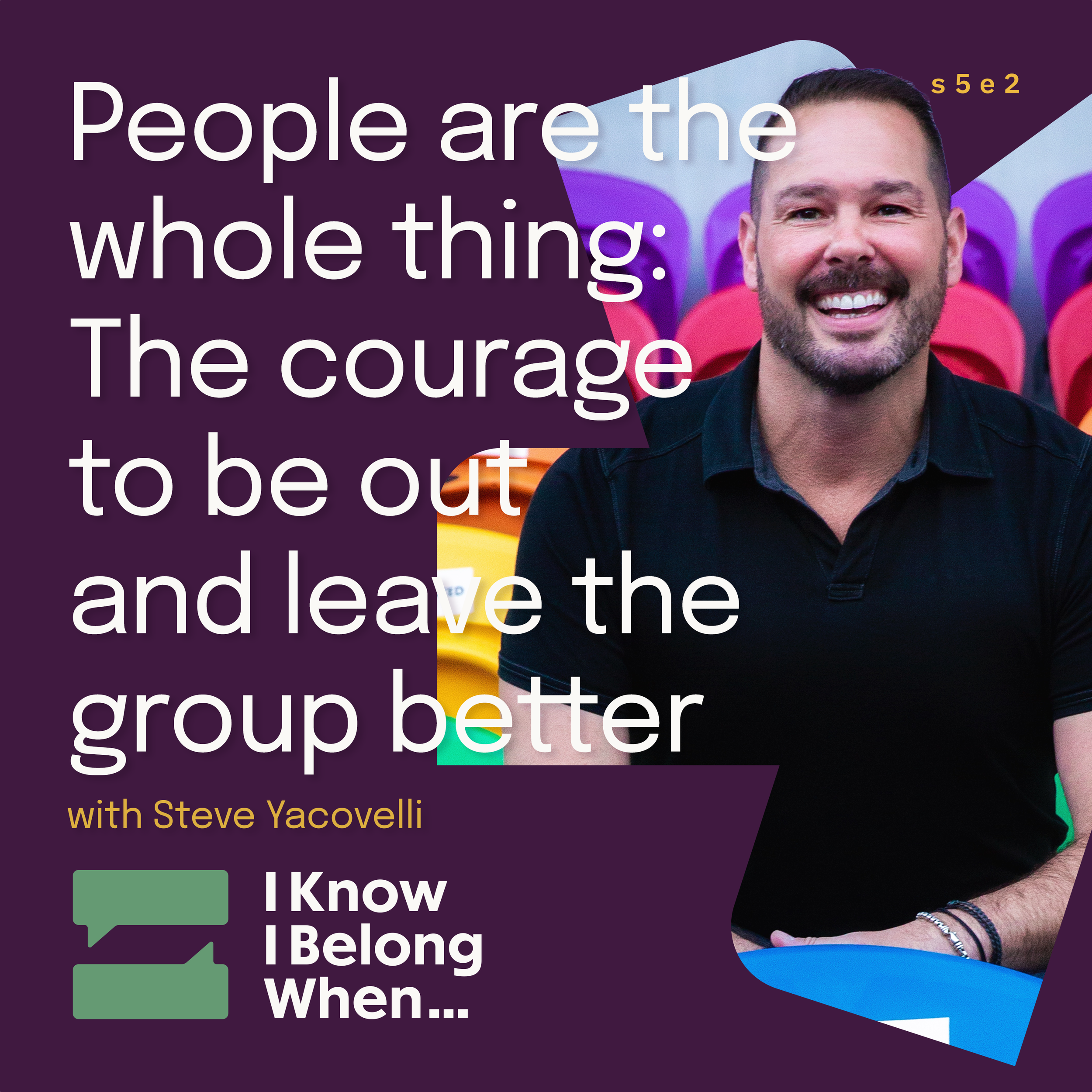
People are the whole thing: The courage to be out and leave the group better with Steve Yacovelli
Engage through your podcast player of choice!
Belonging does not arrive with a new tool, a new title, or a new job. It arrives when people decide to make room for each other. On this episode of I Know I Belong When…, Dr. Steve Yacovelli, known to many as The Gay Leadership Dude®, joins host, Christopher Bylone, for a conversation about courage, identity, and the human side of every change.
Steve has spent more than 30 years in leadership and change management, from IBM and Disney to his own firm, TopDog Learning Group. He is the author of five books, including Pride Leadership and Your Queer Career®. He opens with a truth every organization adopting AI needs to hear: buying the license does not mean people will use it. Change is a people problem first, and people are the whole thing.
Then the conversation turns personal. Steve returns to the mid-1990s and a small software company in Orlando, where he had just come to know himself as a gay man. He shared that truth with colleagues a little at a time, in an era when coming out at work held real risk. Their answer taught him what a sense of belonging at work can sound like. He also recalls the day he confronted a colleague's homophobic joke at 25, and the fire it lit that has never gone out.
Steve also names the moment he knew he did not belong: a boss who questioned his executive future because of the car he drove. That comment made him notice how alike the leaders around him were, and it still shapes how he checks his own assumptions about people.
Watch the full episode :
Must-hear insights & key moments
Why AI adoption stalls when companies skip the change management basics they already know
How The Gay Leadership Dude® name means Steve never has to come out again
Coming out at work in the 1990s, one conversation at a time, and the colleagues who answered with "We don't care"
Confronting a homophobic joke, and using privilege to defend people who hold less of it
Judged by his car: the comment that told Steve he did not belong
"And siblings": the gracious correction that became his standard language
Steve’s standout quotes:
"But now I don't have to come out anymore."
"I had 24 years, not knowing who I was. At this moment, I now know, and I'm not going to look back."
"I don't know where that courage came up as a 25-year-old in this workplace who had just came out, but it was there, and that fire has not gone out ever since."
"I have left the group much better than how I found them"
The ally A.I. prompt
Swap in any group you want to support.
Context: I want to understand the current challenges facing LGBTQ+ professionals in the financial industry, but I don’t want to burden my colleagues with questions. Role: Act as a Cultural Historian and Sociologist. Action: Summarize the top 3 systemic barriers this group faces in corporate environments and suggest how a leader can mitigate them. Format: A 1-page summary with 3 to 5 “Actionable Takeaways” for a Senior Manager. Target Tone: Insightful, data-driven, and empathetic.
Why this episode matters
Organizations are racing to adopt AI, and many are repeating an old mistake: treating change as a technology problem. Steve's story is a reminder that inclusive culture and authentic leadership are built by people, one decision at a time. Belonging grew for him when colleagues valued what he contributed, and when he found the courage to speak up for himself and others. His closing statement gives listeners language for building belonging anywhere: leave every group better than you found it.
Who should listen
Anyone working out who they are, or deciding when and how to share it. LGBTQ+ professionals and the allies who want to show up for them. HR leaders, people managers, and change practitioners guiding AI adoption. Anyone who has been judged by a car, a wardrobe, or a first impression. And anyone searching for language to name belonging in their own life, at work and far beyond it.