
Engage through your podcast player of choice!
What if the clearest blueprint for belonging in the workplace did not come from corporate playbooks, leadership models, or culture decks, though from a global movement rooted in creativity, community, and care?
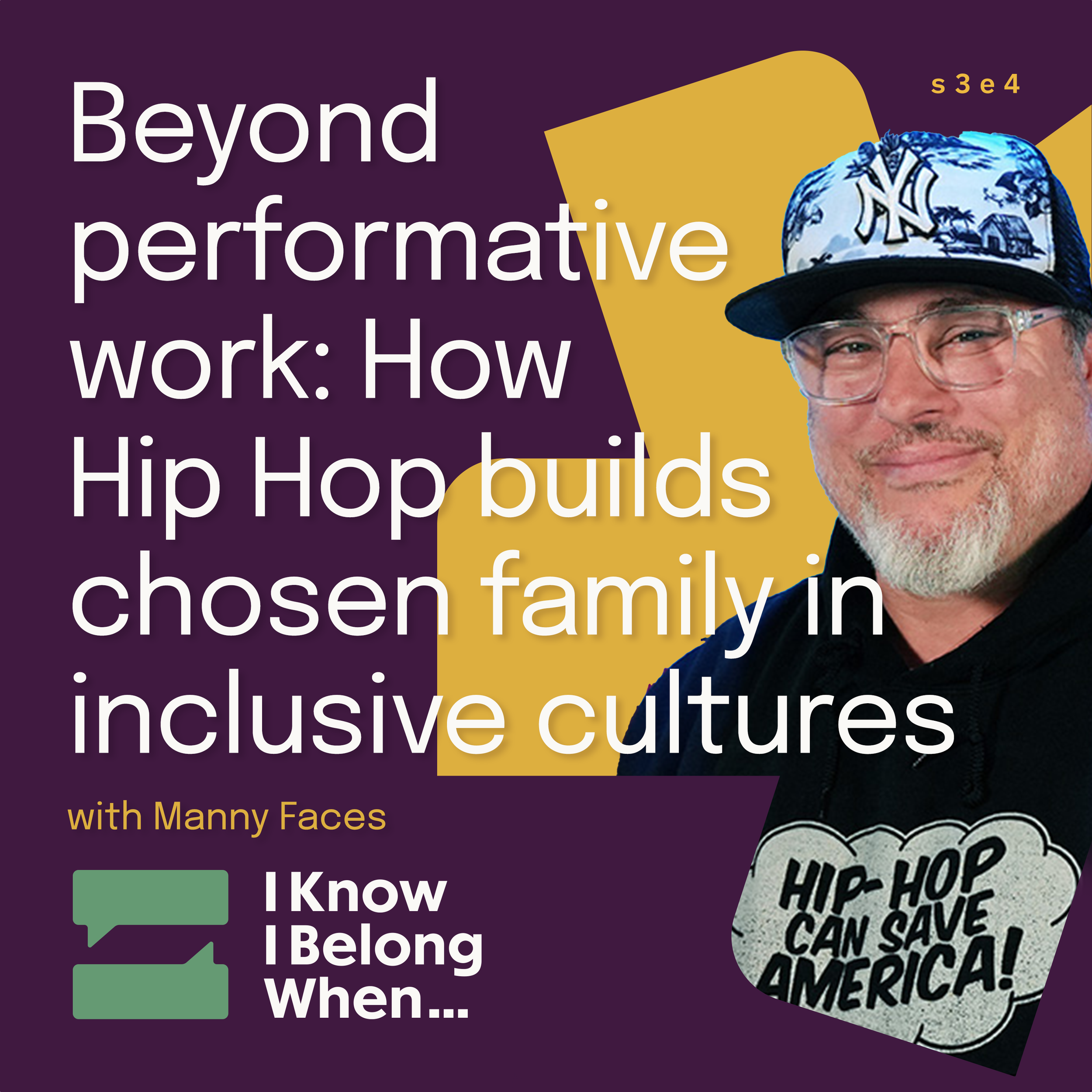
In this episode of I Know I Belong When…, host Christopher Bylone sits down with Manny Faces—award-winning journalist, cultural strategist, TEDx speaker, and founder of the Hip Hop Can Save America! ecosystem—to explore how hip hop culture offers leaders powerful language for belonging and practical insight into how to create a sense of belonging at work.
This conversation reframes belonging vs inclusion, positioning belonging as the outcome of intentional IDEA work rather than a performative gesture. Manny shares how hip hop functions as a living framework for inclusive culture, authentic leadership, and human-centered innovation—one that transcends borders, titles, and institutions.
Listeners will hear how chosen family, psychological safety, and community care show up in unexpected places: a cipher, a classroom, a workplace, a hospital room, and even across continents. Manny’s first-person storytelling gives leaders, HR practitioners, and people managers language to describe belonging in the workplace and clarity on why performative work falls short.
This episode is not about trends. It is about building belonging, creating people experiences rooted in dignity, and understanding why love and belonging needs are foundational to sustainable culture—especially in remote and hybrid teams.
Watch the full episode :
Must-hear insights & key moments
Why hip hop is culture, not music—and what that teaches leaders about workplace belonging
The cipher as a metaphor for psychological safety and a sense of belonging at work
Why belonging is the outcome of strategic inclusion, not another initiative
How chosen family reshapes leadership accountability and community care
What tokenism looks like in institutions and how leaders can clock it quickly
Lessons from global hip hop communities on belonging in remote teams
How lived experience
Manny’s standout quotes:
Hip hop is culture. Culture is how people navigate the world together.
When you step into the cipher, where you came from does not matter. You belong in that moment.
If your institution only engages culture during heritage months, the work is not real.
Belonging feels like family. You know it when you feel it, and you know when you do not.
We do not need more performative moments. We need people of the culture in positions of power.
Community care is not theoretical. It shows up in what you are willing to give.
Belonging crosses borders, languages, and credentials when it is rooted in respect.
Why this episode matters
This episode illustrates that belonging is not declared; it is experienced when an organization's culture is intentionally cultivated with care and community as central values. Many organizations search for more precise terms to describe belonging due to a lack of shared language that communicates what individuals feel when they are safe, recognized, and valued. Through storytelling rather than slogans, this episode offers that essential language. Manny’s analysis links workplace belonging to Maslow’s hierarchy of love and belonging needs, emphasizing that organizational culture efforts can be ineffective if they remain merely symbolic. By presenting belonging as the result of inclusive cultures and genuine leadership, this discussion advances the conversation beyond superficial DEI initiatives toward sustainable people experience strategies.
Who should listen
HR leaders and DEI practitioners seeking practical ways to create belonging at work
Executives and people managers responsible for culture, trust, and engagement
Leaders navigating belonging in remote teams and hybrid environments
Educators and organizational designers exploring human-centered innovation
Anyone searching for language to articulate workplace belonging with clarity and credibility